White blood cells
WHITE BLOOD CELLS (WBC)
White blood cells (leukocytes) are a part of the immune system. White blood cells are produced from specific stem cells in the bone marrow. White blood cells comprise approximately one percent of the total blood volume.
High levels (leucocytosis) may occur, for example, due to stress, infections, inflammation or allergic reactions. In an infection, white blood cells form a defense reaction that identifies and destroys the bacteria, viruses and other organisms causing the infection. A comprehensive population study found that a higher number of white blood cells (top quarter / 7.5 x 10⁹/l) is associated with a higher occurrence of silent inflammation than the lowest value (bottom quarter / 4.97 x 10⁹/l). Silent inflammation is often behind many chronic illnesses (see section “Highly Sensitive CRP” for more information).
Low levels of white blood cells (leukocytopenia) may be a sign of disrupted bone marrow function or an impaired immune system. Such conditions include autoimmune diseases, nutritional deficiencies, and immune system disorders.
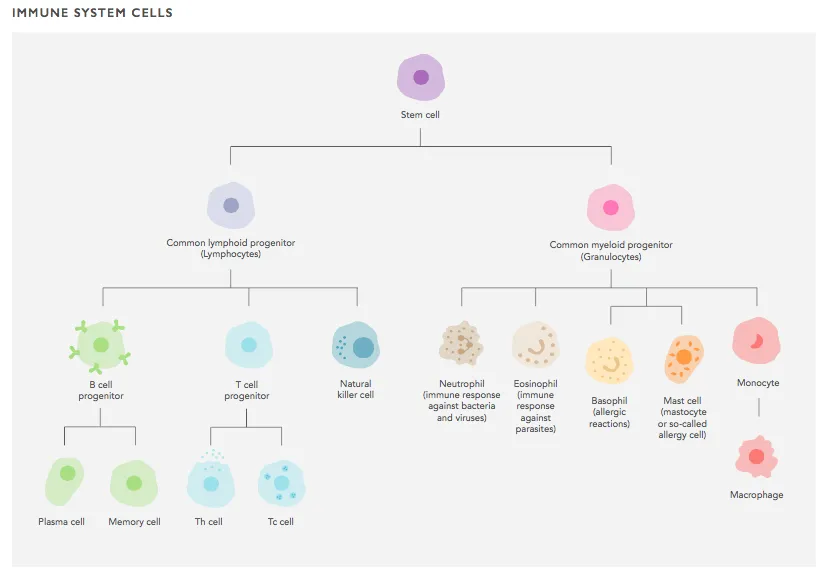
White blood cells are further divided into several types, each having its function in the body. White blood cell types include granulocytes (neutrophils, eosinophils, and basophils), monocytes and lymphocytes (B cells, T cells, and NK cells).
Reference ranges:
- Adults: 3.3–8.2 xE9/l
- Optimal: 4–6 xE9/l
WBC in the optimal range is associated with the lowest risk of all-cause mortality in various populations.