Well-being at work
Well-being at work
Well-being at work has been a growing trend during the past decade. One of the most important reasons for this is the alarming rate of work-related illnesses and burnout. Many people work under constant pressure to produce growth and development, causing more harm than good. Burnouts are particularly common in workplaces where the employees’ happiness levels are poor and stress levels excessive.
Many company healthcare services are swamped with burnt-out employees. According to a large study in 2012, 27.8 % of working US adults and an alarming 37.9 % of US physicians have had symptoms of burnout. According to the same study, 23.2 % of US working adults are dissatisfied with work-life balance, while 40.2 % of physicians have the same issue.
Compared with high school graduates, individuals with MD or DO degree are at increased risk for burnout. It is interesting to note that burnouts are more common in individuals under 40 years of age compared to those over 40.
Burnouts are assessed using a survey form (MBI-GS or BBI-15) and observing changes in the general life situation and health. However, there are no universal criteria for a burnout diagnosis.
- The Maslach Burnout Inventory-General Survey (MBI-GS)
- Bergen Burnout Indicator 15 (BBI-15)
Predisposing factors for burnout include excessively high expectations of oneself and one’s work, poor stress tolerance and coping mechanisms as well as a strong sense of duty. Other predisposing factors include vaguely defined duties, a lack of self-direction and a socially strained work environment.
8 Dimensions of well-being at work
- Career
- Physical
- Social
- Purpose
- Emotional
- Environmental
- Financial
- Intellectual
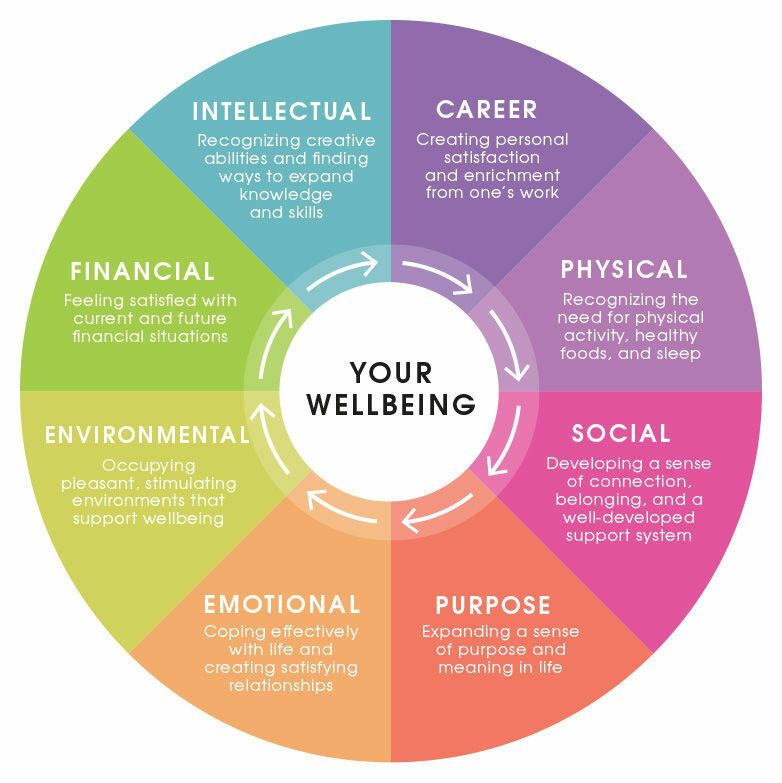
Many businesses globally (especially in Western countries, like the U.S. and Europe) are moving more towards employee well-being initiatives instead of wellness programs. These are comprehensive health and productivity programs that consist of various elements regarding social connectivity, mental health, emotional balance, financial education, and sense of fulfillment on the job to educating employees on personal health aspects such as stress management, sleep, nutrition, movement and recovery (like Optimized Work Life).
According to research by Willis Towers Watson (2015), a healthy and happy workforce can substantially reduce costs generated by an employee over 1600 dollars per year. This is due to better health with reduced sick leave days caused by sudden sicknesses or disabilities.
Forbes Couches Council lists 14 things that will boost employee engagement and productivity:
- On-Site Fitness Programs
- Flexible Working Arrangements
- Mindfulness Training
- New/Working Parent Career Coaching
- Financial Education
- Emotional Intelligence Developmental Training
- Improv Training
- Retirement Coaching
- Access To Healthy Food
- Snooze-Friendly Policies
- On-The-Hour Flash Walk
- A Gratitude Practice
- Deep Sense Of Purpose And Contribution
- Incentive-Based Trips
How do you find your current well-being at work?