Vitamin D basics
VITAMIN D OR CHOLECALCIFEROL (VITAMIN D3)
Vitamin D is exceptional because it is a hormone precursor (a substance that acts similarly to a hormone). Through the vitamin D receptor (VDR), vitamin D acts in the cells of 37 internal organs and affects the function of more than 2,000 genes. Vitamin D has various forms that function in different ways in different parts of the body. These forms include vitamin D1, D2 (ergocalciferol), and D3 (cholecalciferol). The primary hormone is vitamin D3, produced in the human skin as a reaction to solar UVB radiation and later in the kidneys and liver.
VITAMIN D SYNTHESIS IN THE BODY
Vitamin D is also present in seafood, fish liver oil, dairy products, eggs, and mushrooms (mostly vitamin D2). Usually, the amount of vitamin D acquired from food alone is insufficient if sun exposure is unavailable throughout the year. The vitamin D precursors functioning on the tissue level (see image) are first hydrolyzed in the liver, forming the inactive vitamin D storage form calcidiol (25(OH)D), and then in the kidneys, eventually forming calcitriol (1,25(OH)2D), which is bound to the cellular vitamin D receptor (VDR). Laboratory tests usually measure calcifediol.
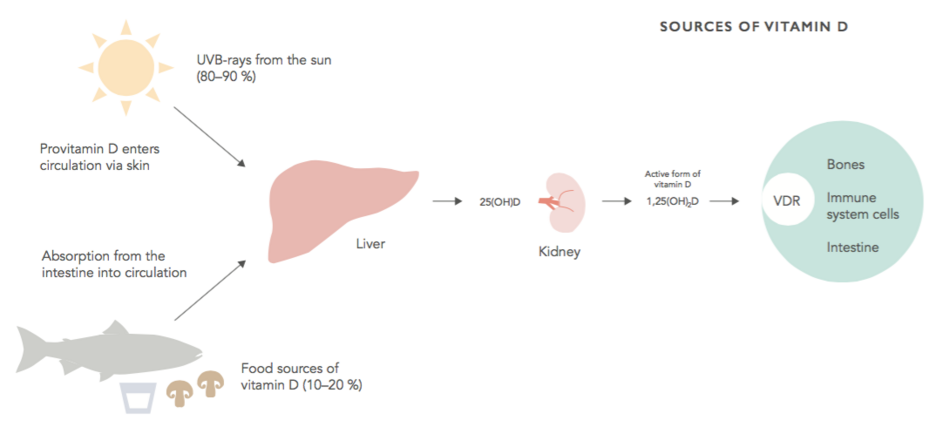
The reference range and the effectiveness of vitamin D in preventing various illnesses are usually also expressed as levels of calcidiol in the blood.
Sufficient magnesium intake is required to produce vitamin D in the skin and kidneys. Inadequate magnesium intake contributes to vitamin D deficiency. Concurrent deficiencies of both magnesium and vitamin D disrupt the magnesium metabolism and the normal function of the brain and immune system, in addition to being a predisposing factor for autoimmune diseases and mental health issues.
Vitamin D has been found to affect the immune system, pancreas, cardiovascular system, muscles, and brain through the vitamin D receptors. Previously, it was thought that vitamin D's main benefit was preventing rickets and osteoporosis. However, research in the past few decades has shown that vitamin D is needed practically everywhere. Vitamin D deficiency has been linked to cardiovascular diseases, various cancers, multiple sclerosis, rheumatic diseases, metabolic syndrome, fibromyalgia, depression, various neurological illnesses, infectious diseases, and even mortality. According to a study conducted by Cambridge University in 2014, the lowest mortality rate was recorded when the blood's vitamin D (calcifediol) level was 90 nmol/L or above.
Conversely, high vitamin D levels did not increase the mortality rate.
Based on recent study findings, vitamin D deficiency may be a more significant public health issue than previously thought. The FIND study, currently being conducted at the University of Eastern Finland, is investigating the effect of vitamin D supplementation on the incidence of cardiovascular diseases and cancers. In addition, the study is researching the effect of vitamin D supplementation on other illnesses such as type 2 diabetes, depression, and bone health. The research subjects have been randomly selected to take a vitamin D supplement of either 0, 40 or 80 micrograms per day. In addition to the study supplement, taking a vitamin D supplement that meets the current guidelines (maximum of 20 micrograms per day) is allowed. The main findings of the FIND study are expected in 2019.
Sufficient vitamin D intake has been shown to protect against the following illnesses:
- Osteoporosis
- Various types of cancer
- Diabetes (types 1 and 2)
- Cardiovascular diseases
- Many neurological diseases
- Psoriasis
- Various infections
- Multiple sclerosis (MS)
- Asthma
- Hypertension
- Arthritis
- Sarcoidosis
- Sjögren's syndrome
- Hashimoto’s disease
- Systemic lupus erythematosus (SLE)
- Scleroderma
N.B.! Although vitamin D may offer protection against various illnesses, the optimal intake alone does not completely rule out the possibility of developing these illnesses.