Ubiquinone
UBIQUINONE (COENZYME Q10)
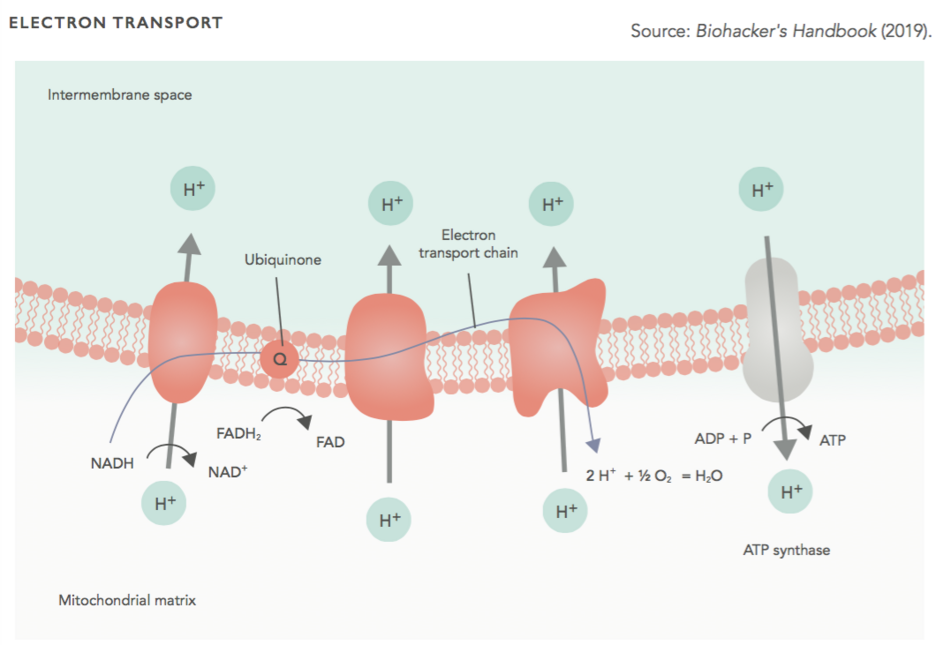
Ubiquinone (coenzyme Q10) is a fascinating compound. The name comes from the Latin word ubique, meaning “everywhere”. Indeed, it has a significant role in the bodies of all animals and even some bacteria – it is present in mitochondria, cell membranes, and lipoproteins in particular. Ubiquinone is fat-soluble and resembles a vitamin in its functions. It facilitates the electron transport chain in the mitochondria (see the following image) and the production of ATP. Most of the body's energy needs are created in this system. Significant amounts of ubiquinone can be found in energy-depleting organs such as the heart, kidneys, liver, and skeletal muscles. The ubiquinone levels of various tissues are known to decrease with age.
Ubiquinone has been used as a dietary supplement to improve cellular energy production for decades. Low cellular ubiquinone levels may be a predisposing factor for various illnesses as the aerobic energy production in the cells is insufficient. Heavy and prolonged sports and training also increase oxidative stress in the body. The number of free radicals may even triple during physical exertion.
When taken with an NADH supplement, ubiquinone has been found to repair the mitochondrial energy production chain in individuals suffering from chronic fatigue syndrome. Ubiquinone is also an effective antioxidant. It protects neurons from oxidative stress.
Ubiquinone is (or at least should be) now recommended as a dietary supplement for individuals taking statins to lower their cholesterol levels. Studies have shown clear evidence of statins reducing the ubiquinone levels in the body. A particularly problematic example is atorvastatin which can reduce ubiquinone levels by as much as 40 %. Individuals who take statins are encouraged to take 100–300 mg of ubiquinone per day. As of yet, there is no scientific evidence of the muscle pains caused by statins being due to reduced ubiquinone levels, or of ubiquinone supplements alleviating these pains. However, increasing ubiquinone to a normal level has many other health benefits.
Ubiquinone has been found to alleviate heart failure and reduce its mortality. Proposed mechanisms for this include antioxidant effects and increased energy production in the cardiac muscle cells. The common dose used in studies associated with heart failure is 200–400 mg daily. Ubiquinone use has also been found to improve blood cholesterol levels, however, there is currently no clear evidence that it prevents cardiovascular diseases.
Sufficient ubiquinone levels in the elderly have been shown to prevent sarcopenia (muscle loss). Combining ubiquinone supplements with strength training, sufficient protein intake, and creatine supplements effectively prevents muscle loss.
There are no recommendations for ubiquinone in the official nutrition guidelines. However, international studies have shown that the intake of food is on average quite low – in a 1997 study on Danes it was 3–5 mg per day, whilst in a 2017 study on men participating in infertility treatments it was 19.2 mg per day (with a range of 2.4–247.2 mg per day). Estimating the intake for Finns is difficult. However, it is likely higher for individuals consuming plenty of offal and meat products.
MEASURING UBIQUINONE LEVELS IN THE LABORATORY
The Finnish reference ranges (CoQ10):
- Adults: 0.41–2.50 μmol/L
- Children (under 15): 0.48–1.44 μmol/L
A definitive optimal ubiquinone level has not been scientifically established. However, body energy production and other functions linked to ubiquinone are likely to be adequate when the value falls at or above the middle of the reference range.