About Tryptophan
Tryptophan is an essential amino acid that plays many key bodily roles. It promotes the normal growth of newborns and maintains the proper balance of nitrogen in adults. Of all the essential amino acids, tryptophan is found in foods the least. However, most various sources of protein contain tryptophan.
Tryptophan acts as a natural mood regulator since it can help the body produce and balance certain hormones. Tryptophan is needed to form melatonin, a hormone that regulates the sleep-wake cycle and has antioxidant properties. In the body, tryptophan gets partially converted to serotonin, a neurotransmitter that regulates appetite, sleep, and mood. It therefore plays an important neurological and physiological role.
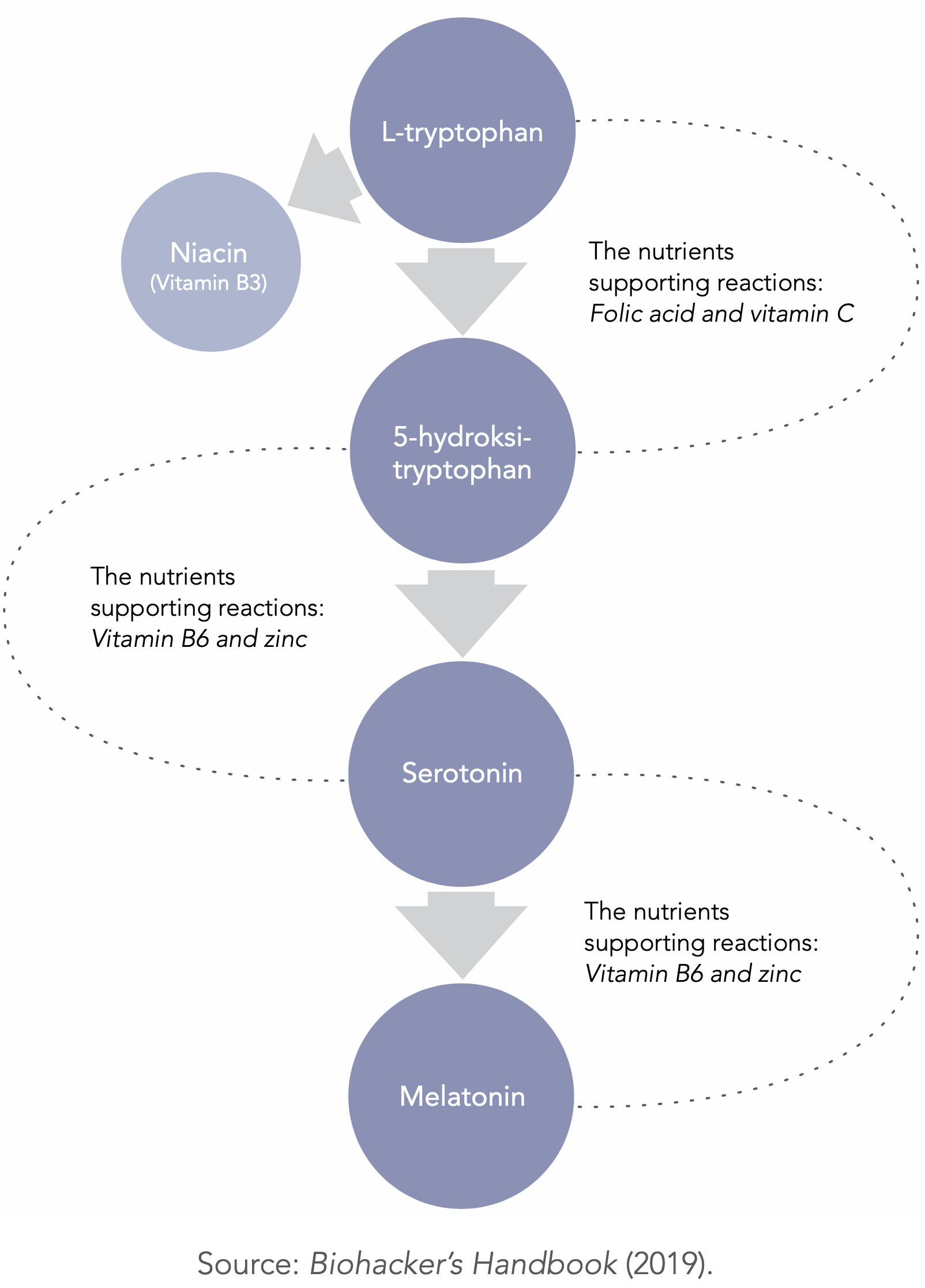
Folate, niacin, vitamin C, glutathione, vitamin B6 and zinc support the conversion of tryptophan to serotonin. Zinc and vitamin B6 support the conversion of serotonin to melatonin, respectively. Niacin (vitamin B3) is an important metabolite of tryptophan. Adequate dietary intake of tryptophan is linked to a more balanced mood, improved learning abilities and normal sleep.
In sports, tryptophan may help improve physical performance and fight fatigue. Competitive athletes have used it for many years since it is known to lower performance anxiety and help people stay motivated to reach their goals.
The best high-quality dietary sources of tryptophan are as follows:
• Whey protein (1,800 mg / 100 g)
• Spirulina (929 mg / 100 g)
• Pumpkin seeds (576 mg / 100 g)
• Liver roast (464.2 mg / 100 g)
• Reindeer roast (451.7 mg / 100 g)
• Roasted veal (451.7 mg / 100 g)
• Minced turkey meat (450.7 mg / 100 g)
• Beefsteak (450.4 mg / 100 g)
• Cashew nuts (450 mg / 100 g)
• Atlantic herring (418 mg / 100 g)
Biostarks reference ranges for tryptophan
- Tryptophan (Trp-S): 33-140 umol/L
Scientific references:
- National Center for Biotechnology Information (2021). PubChem Compound Summary for CID 54608559, L-Tryptophan.
- Jenkins, T. & Nguyen, J. & Polglaze, K. & Bertrand, P. (2016). Influence of Tryptophan and Serotonin on Mood and Cognition with a Possible Role of the Gut-Brain Axis. Nutrients 8 (1): 56..
- Enko, D. et al. (2018). Assessment of tryptophan metabolism and signs of depression in individuals with carbohydrate malabsorption. Psychiatry Research 262: 595–599.
- Rajakumar, K. (2000). Pellagra in the United States: a historical perspective. Southern Medical Journal 93 (3): 272–277.
- Arnouts, P. & Colemont, L. & Van Outryve, M. & Van Moer, E. (1991). L‐tryptophan‐induced eosinophilia‐myalgia syndrome. Journal of Internal Medicine 230 (1): 83–86.
- Philen, R. et al. & Eosinophilia-Myalgia Studies of Oregon, New York, and New Mexico (1993). Tryptophan contaminants associated with eosinophilia-myalgia syndrome. American Journal of Epidemiology 138 (3): 154–159.