Thyroid hormone regulation
THYROID HORMONE REGULATION
The production of thyroid hormones is strictly regulated by what is known as the negative feedback loop or system. The hypothalamus in the brain secretes a hormone that stimulates the pituitary gland, which secretes the thyroid-stimulating hormone thyrotropin (TSH). This stimulates the synthesis of thyroid hormones, the binding of iodine and the release of T3 and T4 into the circulation. When the secretion of these hormones fulfills the body's needs, they send signals back to the hypothalamus and pituitary gland, reducing the production of TSH and thyrotropin-releasing hormone (TRH).
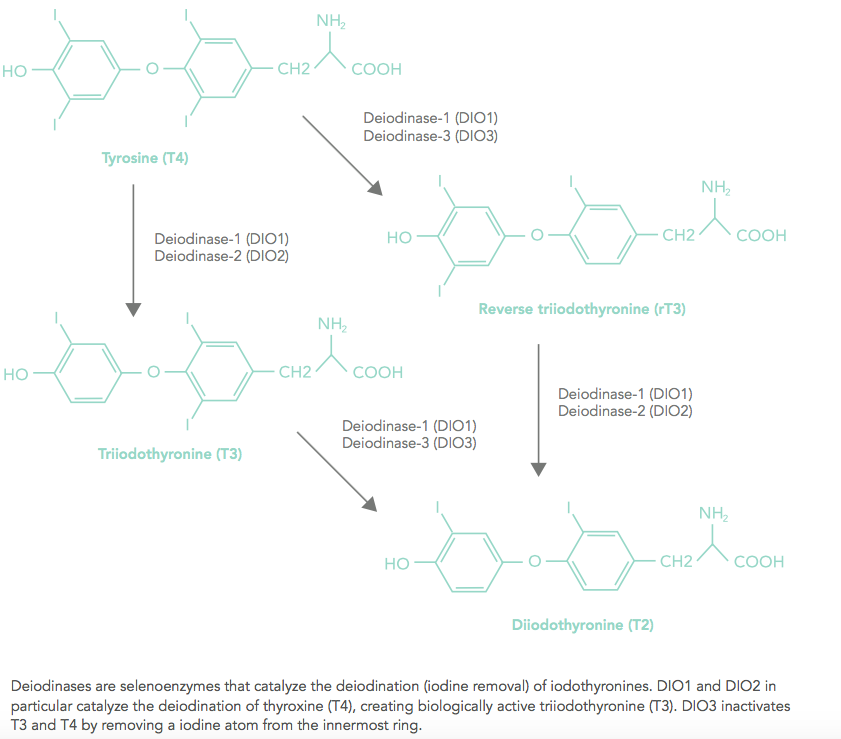
This regulatory system is known as the hypothalamus-pituitary-thyroid axis (HPT axis). This regulation system may be disrupted in some cases, such as chronic illnesses and infections. When the iodine intake from food is sufficient, the regulation is usually balanced. Consistently elevated TSH levels caused by iodine deficiency may lead to an enlarged thyroid gland (goiter). Thyroid hormones affect various tissues via thyroid receptors (TR). See the image below.
IODINE AND THYROID HORMONES
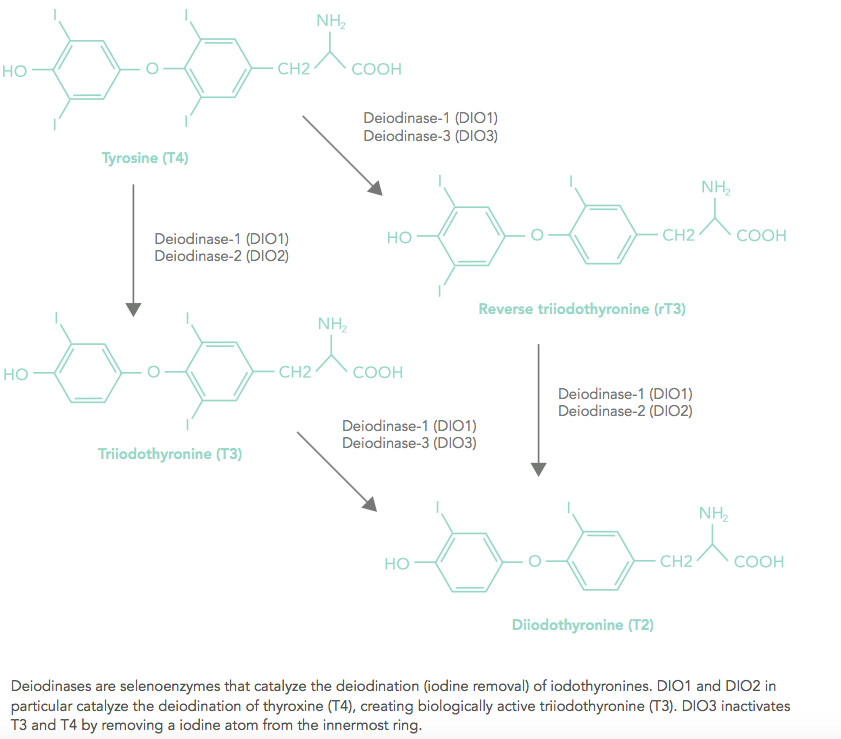
Iodine is required particularly for the synthesis of thyroid hormones. It also has an important role in promoting normal growth and the development of the nervous system and in metabolism, such as protein synthesis and enzymatic activity. Iodine constitutes 65 % of the thyroid hormone T4 (thyroxine) and 59 % of the mass of T3 (triiodothyronine). Thyroxine contains four iodine atoms whereas triiodothyronine contains three. When producing thyroid hormones, the thyroid captures iodine from circulation. It then binds the iodine to thyroglobulin. This is then used to form thyroid hormones according to the body's needs. The hormones are released into circulation or stored in the thyroid.
The thyroid uses approximately 80 micrograms of iodine daily to synthesize thyroid hormones. Globally, iodine deficiency is relatively common, particularly in children. Iodine deficiency also occurs in adults, particularly in areas where the iodine levels in the soil are significantly lower (including Finland and Northern Europe). It has been estimated that up to 30 % of the world's population suffers from iodine deficiency. In the past 30 years, individuals’ iodine levels have decreased by as much as 50 %.
Severe iodine deficiency may cause stunted growth and development, mental retardation, hypothyroidism or goiter. Iodine deficiency may develop rapidly once the daily iodine intake falls below 20 micrograms. Steps to prevent iodine deficiency have been taken globally by adding iodine to salt. However, the amounts used are small considering the levels adequate for good health. Using iodized salt is barely sufficient to prevent the development of iodine deficiency.
You can determine your iodine levels and intake by running a separate iodine test from urine. Over 90 % of the iodine consumed exits the body in urine within two days. International criteria (WHO, 2007) have been established for iodine levels in urine samples.
In addition to iodine, thyroid hormone secretion, production, and activation also require iron, vitamin A, vitamin D, selenium, zinc and the amino acid tyrosine. Vitamin A functions in various tissues via the retinoic acid receptor (RAR), retinoid X receptor (RXR) or vitamin A receptor (STRA6). The retinoid X receptor is needed to activate the vitamin D receptor. Due to this, a sufficient intake of vitamins A and D has synergistic benefits in the target tissue. Among others, the thyroid hormone receptors (TRs) are fully activated when the intake of these two vitamins is sufficient.