Sources of stress
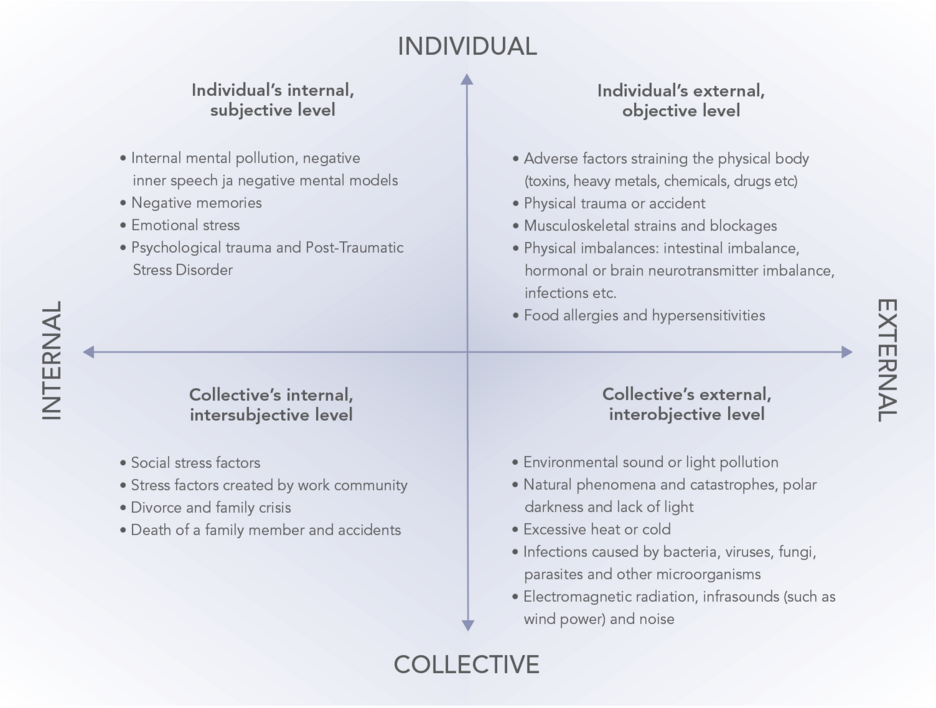
Many sources of stress – Understanding stressors
The father of modern stress is Hans Selyé, a professor of experimental medicine and surgery (1907–1982), born in Hungary. In 1979 he founded a stress institute in Canada. Selyé defines stress as a dysfunctional condition due to the individual's experience of not being able to cope with the demands on himself.
Selyé called a whole set of symptoms caused by negative stress or distress a “general illness” syndrome, i.e., general, non-specific and physical reactions of the body. Later on, the syndrome was called the General Adaptation Syndrome (GAS), which continues to be applied in assessing stress-related systemic disorders.
Selyé was the first to point out the role of stress in the course of every disease. Up to 60–80 % of US medical visits are related to stress. According to statistics, over 50 % of sickness absences in Europe are directly caused by stress. Bruce Lipton, a cell biologist, and researcher, estimates that as many as 95 % of all illnesses are caused by chronic stress. Whatever the number, the estimates and the results are related to the role of harmful stress, especially in chronic diseases.
When examining stress, Hans Selyé developed the term "stressor", which was designed to distinguish between stress-triggering factors (ie. stressors) and the resulting phenomenon of physiological and psychological changes in the body. Today, the term stressor is commonly used to describe stressors from different sources
Stages of General Adaptation Syndrome:
- The alarm stage where the body reacts to a stress-triggered stimulus
- The resistance stage where the body begins to adapt to the stimulus
- The exhaustion stage where the body's defense-related remedies may collapse abruptly
Key factors related to stress and the experience of it:
- Mood
- Personality traits
- The means of survival
- Suppressed anger
- Hopelessness
- Psychological vulnerability
- Reduction of motivation
- Defensive attitude
- Reduction of harmful stress
- Confusing situations related to daily life
Classification of stress
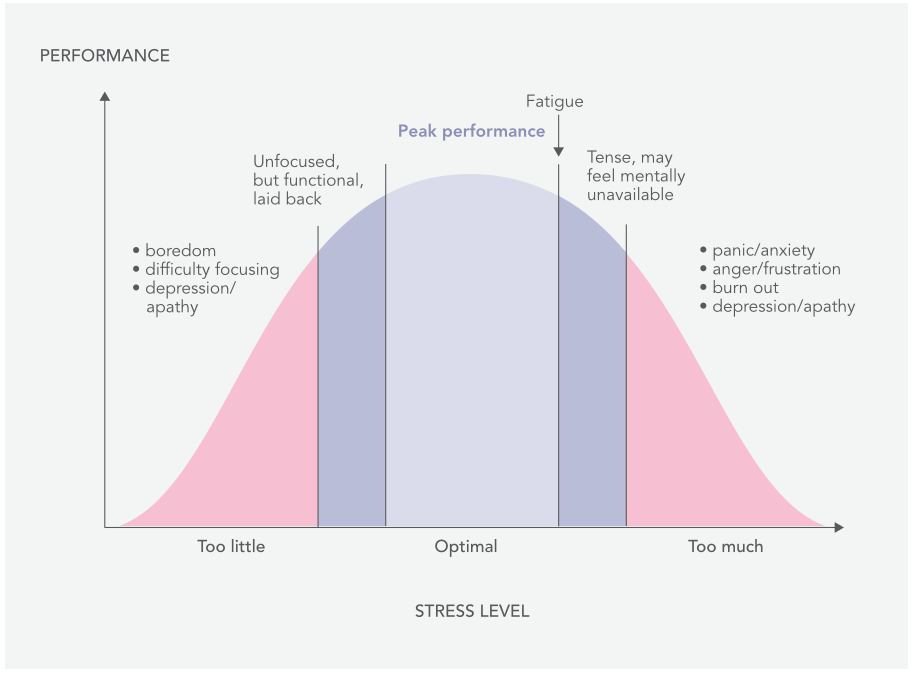
Stress can be divided into different classifications based on duration, intensity or physiological and emotional reactions it produces. One way to categorize stress is to divide it into four types, depending on the intensity of the stress and the bodily effects it produces: hypostress, eustress, hyperstress, and distress. Hans Selyé, the pioneer of endocrinology, called useful stress under the name eustress (eu prefix in Greek means good).
Ideally, a person balances his life between eustress and hyperstress, occasionally visiting the hypostress realm. This classification is used, for example, by the founder of the TACFIT of the Academy of Martial Arts, the trainer of the armies and police forces of various states, and the five-time World Martial Arts Games champion Scott Sonnon in his book Primal Stress.
Stress classification:
- Hypostress: insufficiently low stress
- Eustress: sufficient, adaptable stress
- Hyperstress: recoverable, high stress
- Distress: excessive, unadaptable stress
Upgraded stress thesis: Do things that constantly and adequately challenge you but do not lead to frustration or boredom.
Symptoms related to chronic and too-high stress:
- Constantly sore muscles and/or muscle weakness
- Headache
- Irritability, mood swings and apathy of the mind
- Blurred vision and dizziness
- Loss of appetite
- Memory problems, especially in the case of nearby memory
- Concentration difficulties
- Decision-making difficulties
- Slow down of reflexes
- Frustration
- Lack of motivation