SHBG
SEX HORMONE BINDING GLOBULIN (SHBG)
Sex hormone-binding globulin (SHBG) is a protein produced by the liver. It binds to testosterone, dihydrotestosterone, and estradiol, making them biologically inactive in the blood. In men, high SHGB levels may lead to a lower-than-usual bioavailable testosterone level. Low SHBG levels suggest that a higher percentage of testosterone is bioavailable and not SHBG-bound.
SHBG binds male sex hormones more robustly than female sex hormones. In women, low SHBG levels may lead to hyperandrogenism, or they may be indicative of insulin resistance. High SHGB levels may be caused by hyperthyroidism, liver disease, eating disorder (anorexia), estrogen medication and corticosteroid treatment, pregnancy or hypogonadism. Lower SHBG levels may be caused by hypothyroidism, PCOS, obesity, anabolic steroids or Cushing's disease.
The role of SHBG, beyond being a sex hormone-binding agent, is increasingly widely understood. For example, excessively low SHBG levels in women may be an independent risk factor for cardiovascular diseases, increasing mortality. On the other hand, excessively high SHBG levels may increase the risk of osteoporosis. In men (as well as women) low SHBG levels are linked to metabolic syndrome and insulin resistance. The table below presents factors suggested by scientists for the use of the SHBG marker in the future.
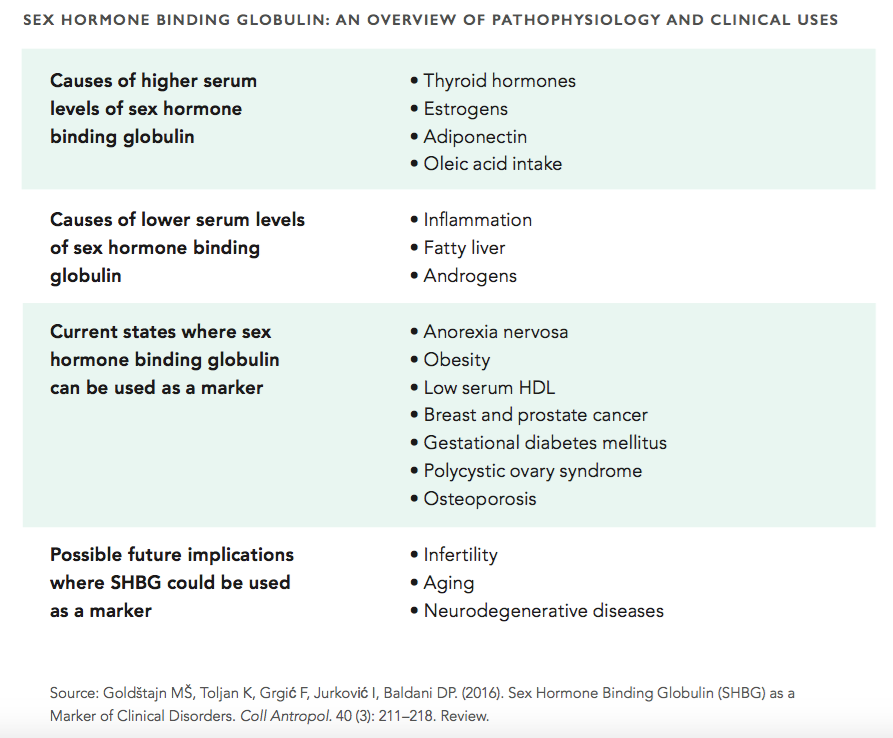
The levels of testosterone and SHBG in the blood are strongly genetic in women. Lifestyle factors may influence these levels in women and men, although the effect is much less significant in women.
Factors increasing SHBG levels include:
- Estrogens (particularly estradiol, including contraceptive pills)
- Pregnancy (in some cases the SHBG value may increase tenfold)
- Weight loss
- Calorie restriction in post-menopausal women
- Liver diseases such as cirrhosis and hepatitis infections
- Growth hormone deficiency
- Hyperthyroidism
- Excessive training and overtraining
- Low-fat diet
Factors decreasing SHBG levels include:
- Androgens (including testosterone used externally)
- Obesity
- Insulin
- Growth hormone use and acromegaly
- High intake of carbohydrates from food
- Metabolic syndrome
- Cushing’s syndrome
- Type 2 diabetes
- PCOS and congenital hyperplasia
In men, the adequate intake of vitamin D, zinc and magnesium has also been found to reduce high SHBG levels.
Reference ranges for SHBG:
- Women: 20–155 nmol/L
- Men: 14–71 nmol/L
Optimal SHBG levels have not been defined. Based on previous studies, however, the levels should be within the normal range and preferably close to the midway point. Values at the upper or lower limit of or outside the reference range may indicate health disorders or cause health problems. Regarding age, SHBG levels follow a U-shaped curve – the highest levels are found in very young and old individuals.