Potassium intake
POTASSIUM INTAKE FROM FOOD
The recommended intake of potassium for adults is typically:
- Men: 3,500 mg per day
- Women: 3,100 mg per day
- Pregnant women: 3,100 mg per day
- Breastfeeding women: 3,100 mg per day
The average potassium intake for adult Finnish men (aged 25–64) is 4,100 mg per day; for adult women (aged 25–64), it is 3,400 mg per day. The results indicate that Finnish people get enough potassium from food compared to the guidelines. Whether the guidelines for potassium intake are sufficient for optimal health and well-being is a question worth considering. According to clinical studies, the ideal potassium intake to prevent, for example, stroke, hypertension, osteoporosis or kidney stones is 4,700 mg/day. The recommended dietary allowance (RDA) for potassium in the United States is 4,700 mg/day for men and women, and 5,100 mg/day for pregnant women. On the other hand, in the United States, potassium intake is very low compared to Finland (2,300 mg/day for women and 3,100 mg/day for men).
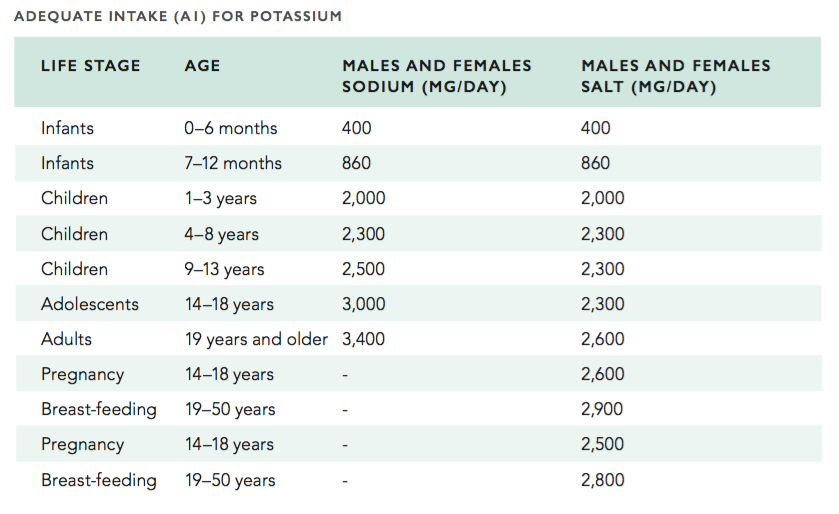
The Dietary Reference Intakes (DRIs) for potassium have been recently revised by the Food and Nutrition Board (FNB) of the National Academy of Medicine. The FNB did not find sufficient evidence to determine an Estimated Average Requirement (EAR) and derive a Recommended Dietary Allowance (RDA); instead, they established an adequate intake (AI) based on median intakes in generally healthy people.
MEASURING POTASSIUM LEVELS IN THE LABORATORY
The potassium balance and levels can be measured from blood plasma and serum, red blood cells or whole blood. Potassium levels in the serum or plasma are used to monitor fluid and electrolyte balance and acid-base homeostasis. Elevated levels occur in connection with tissue damage (rhabdomyolysis, hemolysis), kidney deficiency, adrenal deficiency (Addison’s disease), acidosis (where potassium is transferred from within cells to the space outside them), shock, tissue hypoxia, insulin deficiency, digoxin poisoning, and treatment involving spironolactone, amiloride or triamterene.
Low potassium levels occur due to the use of diuretics, fluid therapy containing insufficient potassium, dehydration due to diarrhea or vomiting, excessive use of laxatives, kidney disease (nephritis, tubular injury), alkalosis, primary and secondary hyperaldosteronism, Cushing's syndrome (hypercortisolism), excessive insulin intake, and magnesium deficiency.
Typical reference range (serum potassium):
- Adults: 3.6–5.0 nmol/l