Optimize sleep quality
OPTIMIZE SLEEP QUALITY
Optimizing your sleep quality begins with optimizing the bedroom (see a separate module). When you have optimized your bedroom, begin to take action during the day to prepare for better sleep at night. Here are the things you should focus on:
GET ENOUGH BLUE SPECTRUM LIGHT
Getting enough blue spectrum light (short wavelength 450–490 nm) during the day, especially right after waking up, is important in maintaining alertness and circadian rhythm.
- Spend time in sunlight
- Take a minimum 15-minute walk daily
- Set up your workstation next to the window
- Avoid the use of sunglasses during the day that block blue spectrum light. It may start the production of melatonin at the wrong time.
- Use a full-spectrum light therapy lamp
TAKE REGULAR DAILY EXERCISE
- 20 to 30 minutes of exercise daily helps balance the daily rhythm and significantly improves sleep quality
GET RID OF MUSCLE TENSION
Pain in the muscles and connective tissue may cause insomnia.
- Try acupuncture, massage, sauna, yoga and stretching
- Take relaxing baths (e.g. with magnesium chloride in the bath water during the evenings)
- Try low-frequency whole-body vibration to release stress and tension
GETTING READY FOR BEDTIME
It is time to prepare for bedtime when the day turns into evening and night. We recommend going to be by your circadian rhythm based on your chronotype.
Going to bed and waking up simultaneously daily increases sleep quality and decreases health risks. It also balances nocturnal body temperature, which is important for health. Minimize moonlight during the night, because it can interfere with melatonin production
NUTRIENTS AND SUPPLEMENTS THAT IMPROVE SLEEP QUALITY
Supplements and adequate nutrients in your diet can help the body produce melatonin, relax, and induce brain wave patterns associated with the N1 phase.
Magnesium citrate is a mild sedative that helps the body fall asleep. It also increases the amount of deep sleep and decreases nocturnal cortisol levels. The appropriate dosage is 400 mg.
Magnesium glycinate, magnesium malate, and magnesium taurate also provide amino acids that support liver functions at night. The appropriate dosage varies from 200 to 1000 mg.
Potassium citrate, or potassium carbonate, works synergistically with magnesium. It can lower the incidence of nocturnal spasms in the limbs, and balance sleep quality.
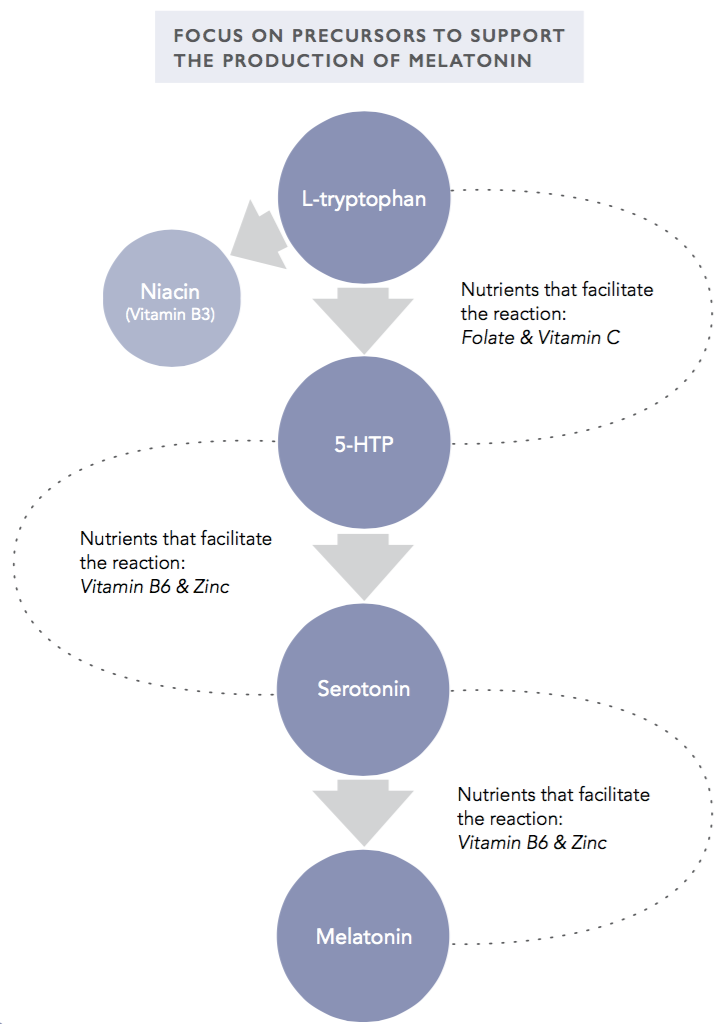
- Tryptophan acts as a precursor to serotonin and melatonin. Tryptophan levels can be elevated in the evening by consuming some of the following food products about 1 or 2 hours before going to bed: white and brown rice, banana (not overripe), pumpkin seeds, turkey, chicken, eggs, nuts, whole grains, brown rice, lentils, sesame seeds, sunflower seeds, white fish and avocado (not overripe). Calcium and vitamin B6 facilitate the absorption of tryptophan.
- Relaxing adaptogens: lingzhi mushroom (reishi), holy basil and ashwagandha
- L-Theanine increases alpha waves and can help fall asleep. Experiments with rats have shown that theanine improves the quality of sleep when coffee has been ingested during the day.
- Zinc naturally raises testosterone levels. Sufficient levels improve the quality of sleep.
- Taurine decreases stress and anxiety and increases the amount of the anxiety-inhibiting neurotransmitter GABA in the body. The appropriate dosage is 500–1000 mg of taurine every night, 1 hour before bedtime
Supplements with a therapeutic purpose (only to be used as a last resort):
- 100–200 mg of 5-HTP or 0.3–3 mg of melatonin an hour before sleep. The effect can be augmented with 50–100 mg of vitamin B6 and 15–30 mg of zinc. Their combination, ZMA (Zn+Mg+B6), is also recommended.
- 240 mg of vitamin B6 taken before sleep can help with remembering dreams more vividly
- 500–1000 mg L-tryptophan, 1–2 times daily, preferably at night. It is best absorbed when ingested together with carbohydrates. Folate and vitamin C help in converting it to 5-HTP.
- Take vitamin D with fatty foods in the morning or during the day. Do not take it in the evening, since vitamin D interacts with melatonin production.
AVOID SUBSTANCES THAT DISTURB SLEEP
Some people are more sensitive to for example caffeine than others. Especially if you know that you are sensitive to caffeine or other stimulants, avoid them completely or diminish their usage if you have sleeping problems.
- Avoid caffeine (coffee, tea, energy drinks, guarana, maté) 5–8 hours before bed. You can use 1000–2000 mg of vitamin C to make caffeine leave the body quicker (Kakadu plum, camu camu, Acerola cherry, rosehip, ascorbic acid). Alternatively, you can chew whole cardamom seeds (5 to 10 pieces) to destimulate the central nervous system.
- Avoid theobromine and theophylline (found in cacao and kola nuts) 6 to 10 hours before bed.
- Limit late-evening alcohol consumption to two doses maximum. Alcohol reduces REM sleep. Enjoy your last glass of alcohol no later than 90 minutes before sleeping.
- Tyramine increases the production of noradrenaline, which boosts brain activity and keeps you awake. The following food products contain tyramine, so they should be avoided at dinner: bacon, cheese, chocolate, eggplant, potato, sauerkraut, sausage, spinach, tomato, and wine.
BEVERAGES THAT HELP FALLING ASLEEP
Some beverages will typically affect the GABA anxiety-inhibiting neurotransmitter in the brain. These include for example:
- Valerian 150–300 mg, at bedtime
- Chamomile 500–1500 mg, at bedtime
- Passionflower 100–200 mg, 2–3 times a day
- Hops 100–200 mg, 2–3 times a day
- Kava 120–150 mg, at bedtime
OTHER THINGS TO PAY ATTENTION TO FOR OPTIMAL SLEEP
Adequate hydration
Dehydration and excessive water consumption can keep you up at night.
- Drink water, especially if you’ve consumed common diuretics (like alcohol, coffee or tea)
- Limit your beverage consumption in the evening if you often wake up at night to go to the bathroom. A good dose is 2–3 dl about 90 minutes before bed.
- The liver is typically at its most active between 1 a.m. and 3 a.m., and wakefulness during these hours can be a sign of dehydration
- Saw palmetto or nettle root teas might relieve prostate problems
Optimal body temperature
The body's temperature drops during the night and the drop can be aided in several ways.
- Avoid exercise (= stimulation of the central nervous system and rise in body temperature) for two hours before going to bed
- Practice cold exposure in the evening (e.g. cold showers, winter swimming, or ice baths)
- Try sleeping naked or with very little clothing
Empty your mind
After a long workday, or with a large workload ahead, it is especially easy to get stuck with incessant thoughts, which stimulate brain activity and prevent falling asleep.
- Use meditation to empty your mind
- Stop working at least an hour before going to bed
- Write down a to-do list for work tomorrow, so that unfinished business does not get stuck in your head
- Write in a gratitude journal before going to bed (e.g. three things that happened during the day that you can feel grateful for)
- Write down positive affirmations (to program your mind for the next day)
Optimize blood sugar levels at night
If blood sugar levels drop during the night, it releases glucose-regulating hormones such as adrenaline, glucagon, cortisol and growth hormone. This process can wake you up. (Read more about blood sugar regulation in Week 5).
- Eat no later than two hours before going to bed
- Consume slowly digestible foods (such as meat) no later than four hours before bedtime. This allows the food to be digested in your system.
- Try 1 or 2 tbsp of MCT oil, or omega-3 oil, 30 to 60 minutes before bedtime
- Try 1 or 2 tbsp of collagen or whey protein
- Try a spoonful of organic honey to replenish the liver’s glycogen reserves. These reserves are depleted in 12 hours.
Avoid blue spectrum light in the evening
Increasing red spectrum light and decreasing blue spectrum light kickstart melatonin production.
- Avoid using the computer, mobile phone or television, for an hour before going to bed
- If you must use your computer in the evenings, filter out blue spectrum light with an appropriate computer program or a filter (a layer of film) on top of your screen
- Use special shades that filter out blue spectrum light when going to sleep or when visiting the bathroom at night
SLEEP AND BLOOD SUGAR REGULATION
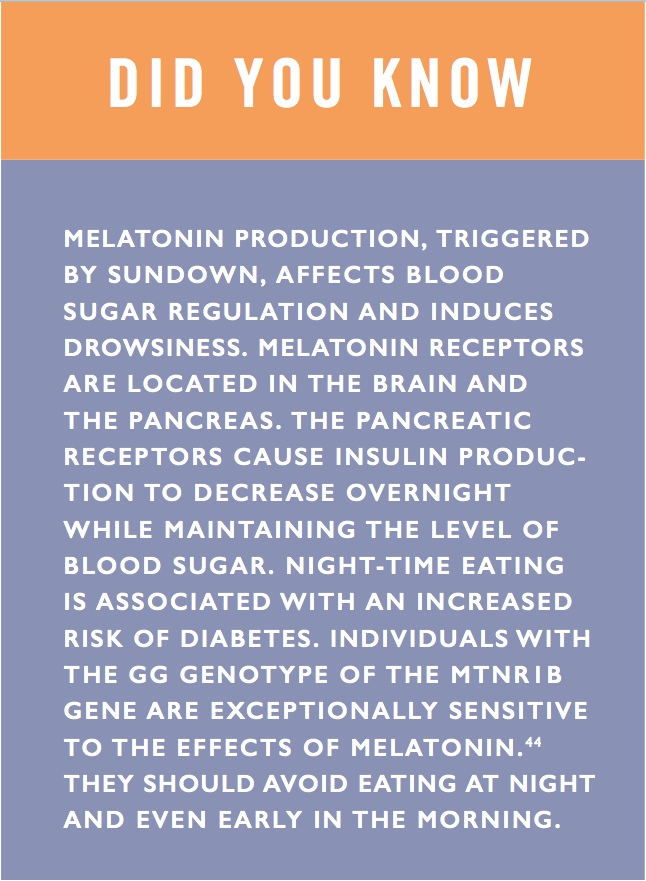
Blood sugar levels fall steadily when fasting during waking hours. Conversely, blood sugar levels usually remain constant during sleep. This is due to the blood sugar level initially rising by approximately 20 % at the beginning of the sleep cycle and then slowly falling to a normal level. These observations indicate that glucose utilization for energy is decreased during sleep. During non-REM sleep, the brain's glucose metabolism decreases by 11 %. Conversely, glucose metabolism is increased during REM sleep and when awake.
Sleep deprivation has a significant impact on blood sugar regulation. Being severely deprived of sleep (four hours of sleep per night) for as little as one week impairs the use of glucose for energy and raises fasting blood sugar. It is also a predisposing factor for sugar metabolism disorders (pre-diabetes). According to a study, individuals who sleep less than 6.5 hours per night have up to 40 % lower insulin sensitivity compared to those who get a normal amount (7–8 hours) of sleep per night.
Impaired insulin sensitivity is a predisposing factor for blood sugar swings, obesity, and type 2 diabetes. According to a meta-analysis published in 2015, for blood sugar regulation and diabetes prevention, the optimal amount of daily sleep is 7–8 hours. It is worth noting that excess sleep may also impair blood sugar regulation.
Sleep deprivation also interferes with the sensation of hunger by affecting the secretion of leptin and ghrelin. According to a study conducted on young men, insufficient sleep (4 hours) on just two consecutive nights decreased the level of the satiety hormone leptin by 18 % and increased the level of the hunger hormone ghrelin by 28 %. Individuals experiencing sleep deprivation reported a significant (24 %) increase in appetite, particularly for sweet, salty or starchy foods. More comprehensive population studies have also yielded comparable results.
OPTIMAL WAKING UP
Emulating a natural environment can reduce the stress response caused by a regular alarm clock. The body has also been fasting for the entire night. Muscles might be tense, but there are ways to reduce this tension. Implement these things to your morning routine:
- Use a wake-up light that imitates a natural sunrise
- Create a gradually developing soundscape that emulates nature waking up to its full glory
- Ingest 400 ml of water (for rehydration), 2 tbsp of lemon juice (to balance gastric acids) and half a teaspoon of salt (for your adrenal glands) within 30 minutes of waking up
- Try inversions, and a hand- or headstand, to improve the circulation in your body and boost your adrenal glands
- Try yoga, jogging or stretching
- Try a warm shower or bath finished by a cold shower (that closes the pores in your skin)
- Try a vibration plate, jumping jacks, or mini-trampoline to increase blood and lymph circulation