Optimize bedroom
WHY SLEEP MATTERS
Sleeping problems have increased in conjunction with sitting and electronic device usage. According to a 2011 study by the National Sleep Foundation, 63 % of Americans say they do not sleep enough during the week. About 15 % of adults between 19 and 64 say they sleep less than six hours on weeknights. 95 % use electronics like a television, computer, video game or cell phone at least a few nights a week within the hour before bed. Artificial light exposure can disrupt sleep by suppressing the release of the sleep-promoting hormone melatonin.
Sufficient and good sleep at night contributes to better performance, awareness, mood, ability to handle stress, skin quality, sports performance, the capacity to learn new things, and the ability to maintain general wellbeing. The aim is to reserve as much time as possible for important things, while simultaneously making sure that sleep is not compromised. This ensures that recovery becomes possible and that new learnings can be integrated and assimilated.
FACT: Forty-eight percent of Americans report insomnia occasionally, while 22 percent experience insomnia every or almost every night.
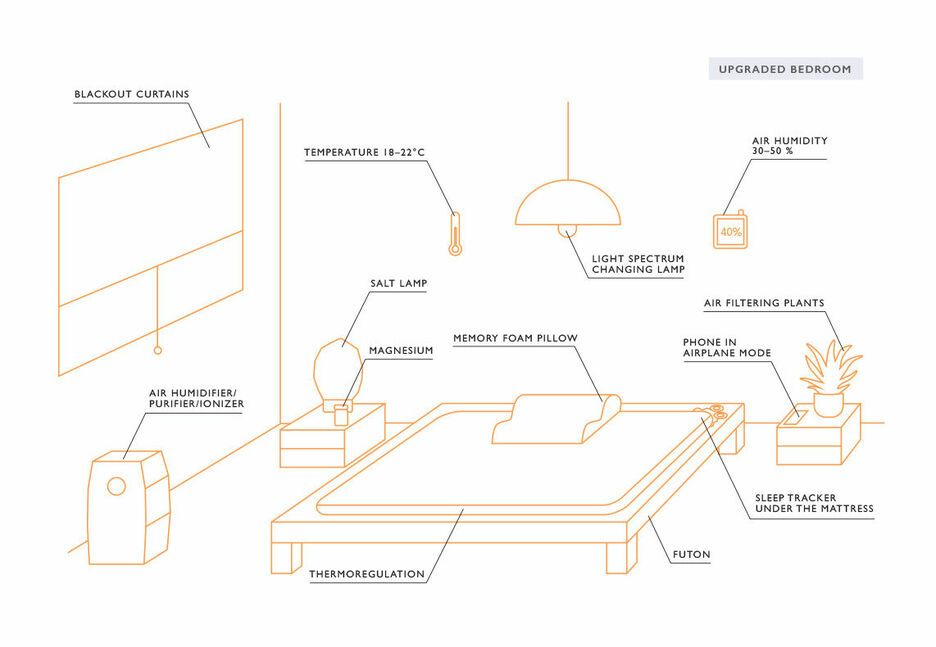
Optimize your bedroom
Setting up your bedroom is crucial for high-quality sleep, especially if you are a "light sleeper" and sensitive to external stimuli. The key aspects of optimizing a bedroom are:
- Darkness & optimal lighting
- Bed quality and ergonomics
- Air quality
- Air temperature
- Reducing or eliminating electromagnetic pollution
DARKENING THE ROOM AND OPTIMAL LIGHTING
Sunlight, moonlight, and LEDs on electronics can disturb sleep. Instead, try:
- Using blackout curtains
- Darkening the LEDs of your electronic devices with black adhesive tape
- Switching lamps to brands that do not emit the blue spectrum of light
- Special lamps that change the spectrum of light according to the cycle of the day
- Dim salt lamps
BED QUALITY AND ERGONOMICS
Bed materials that do not breathe may induce allergies, and unergonomic beds may disturb sleep. Instead, try:
- A mattress or futon made of organic cotton, wool, hemp or natural rubber (instead of being covered with polyurethane foam and chemicals that are potentially allergenic)
- Oat, cherry, spelt or buckwheat pillows
- Choosing materials for your sheets and blankets that promote better thermoregulation (organic cotton, leather, silk, etc.)
- Sleeping without clothes (so that the rubber bands on the waist cannot block your lymphatic system)
- Sleeping without a pillow
- Using a pillow that supports the neck
- Having a pillow between your legs (when sleeping on your side)
- Sleeping on your back or right side. Other positions put stress on your internal organs. Sleeping on the left side or your back is a better option if you suffer from heartburn.
- Use a heavy comforter and bed sheets if you have a tendency to change positions frequently during the night
- Sleeping on your stomach is not recommended to anybody (except to those suffering from spinal disc herniation)
- Sleeping on your back is not recommended if you suffer from sleep apnea due to the risk of respiratory arrest
AIR QUALITY
Research shows that poor indoor air quality affects respiratory organs and can thereby cause sleeping problems. Instead, try:
- Ventilating the bedroom during the day
- Excluding the possibility of mold (DIY measuring kits or measurements done by professionals)
- The use of house plants to increase humidity, turn carbon dioxide into oxygen, and release negative ions into the air (for example, golden cane palm (Dypsis lutescens), snake plant (Sansevieria trifasciata) and devil’s ivy (Epipremnum aureaum)
- Ventilating the bedroom properly at night, but avoid a direct draft near the head
- Air filtering (UV, HEPA, carbon filtering, photocatalytic oxidation, air ionizer)
- Adjusting humidity with technical tools. Most people prefer 30–50 % humidity.
- Having a house that ventilates properly and choosing appropriate indoor materials: natural construction methods, eco paints, and finishing materials
- Using specific incenses and relaxing essential oils (ylang-ylang, vanilla, lavender) may increase sleepiness at the cost of air quality
TEMPERATURE
The temperature of the body drops during sleep. Sleeping in a room that is too hot or cold makes it difficult to maintain optimal thermoregulation. Instead, try:
- Adjusting radiators and air conditioning
- Keeping windows open and ventilating the space properly
- The optimal temperature for most people is around 18–22 degrees Celsius (64–69 Fahrenheit)
ELECTROMAGNETIC POLLUTION
Some people may experience sensitivity to electromagnetic radiation. Dozens of studies have been conducted on electromagnetic hypersensitivity (EHS), but its existence has not been successfully verified. Some studies suggest that “grounding” can alleviate insomnia. Instead, try:
- Placing WLAN routers and mobile phones at a distance, and switching mobile devices to flight mode. Please note, however, that a 20-minute call will emit more radiation than a WLAN base station per year.
- Walking barefooted during the day, or using grounding (earthing) shoes
- Scanning the radiation levels in the bedroom (with EMF and EMC detectors)