Optimal naps
USE POWER NAPS FOR SUPERIOR PRODUCTIVITY
The Spanish surrealist Salvador Dali loved to nap. While sleeping on his armchair, he would dangle a spoon on top of a tin plate. Upon dozing, the spoon would fall onto the dish and wake him up. Salvador’s naps were real “power naps.”
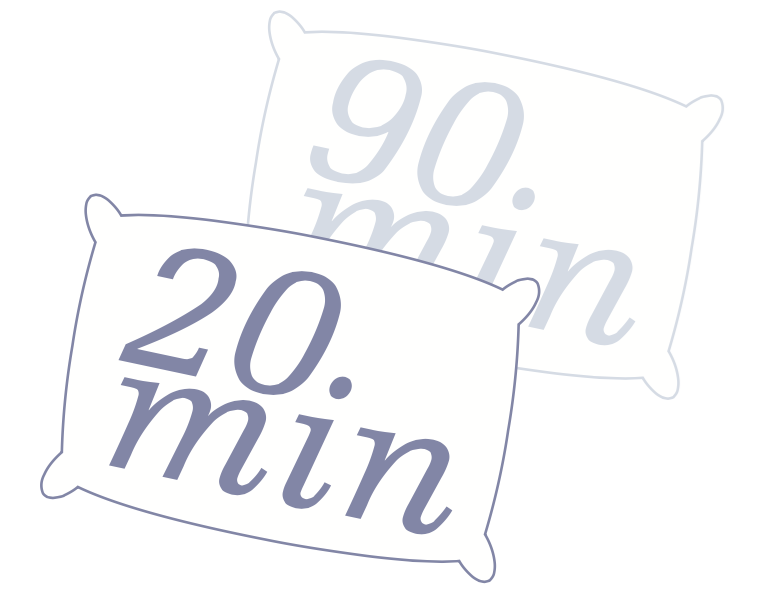
The secret to efficient napping is to prevent yourself from falling deeper than the N1 and N2 stages of sleep. Naps should last no longer than 20 minutes. Longer naps often lead to grogginess. This so-called “sleep inertia” phenomenon is caused by the increased production of adenosine. If one wishes to catch up for lost sleep or accelerate one’s ability to learn, sleeping a bit longer can sometimes be beneficial. In such cases, it is best to plan the nap for a complete cycle, i.e., about 90 minutes.
The best time to nap is about 6–8 hours after waking up when the circadian dip in alertness and sleep propensity is highest.
Studies show that naps can improve memory and reverse the performance deteriorating effects caused by sensory overload. In studies conducted at the University of Loughborough sleep laboratory, it was discovered that naps lasting less than 15 minutes reduced mistakes by 9 % in a monotonous driving test. In the same test, people who ingested 200 mg of caffeine before the nap made 34 % fewer mistakes.
Combining caffeine and napping is an efficient combo. It takes about 20–45 minutes for the caffeine to kick in. A cup of coffee right before napping doesn’t begin to have an effect until after the nap, which means it won’t negatively affect your sleep.
A RECIPE FOR AN EFFICIENT NAP:
- Avoid caffeine and other stimulants 1–4 hours before the nap
- Drink a cup of coffee, or ingest 200 mg of caffeine, immediately before your nap
- Set the alarm to 20 minutes (with or without caffeine) or 90 minutes (without caffeine)
- Cover your eyes with a sleeping mask that filters out distracting light
- If you are in a noisy environment, use earplugs or experiment with headphones playing white noise
- Breathe deeply and calmly. Impersonating someone sleeping actually may help.
- Our recommendation is to try napping with a spike mat to release endorphins and oxytocin and increase blood flow