Optimal immunity & health
Optimal immunity and health
The word “immunity” originates from the Latin word immunis meaning exempt. Generally speaking, immunity consists of all of the body’s defense systems that resist infections and toxins. The immune system, therefore, has a crucial role in fending off intruders.
The immune system can be considered a military defense system resisting uninvited guests. To put it dramatically, the troops patrolling the body mercilessly attack intruders, blasting bacteria, poisoning parasites, devouring viruses and forcing cancer cells to commit suicide. However, sometimes the soldiers get hit by friendly fire.
Autoimmune diseases such as arthritis and psoriasis involve a state of imbalance where the immune system erroneously attacks the body’s protein, sugar or cell structures.
Food and pollen allergies, on the other hand, are examples of exaggerated immune reactions.
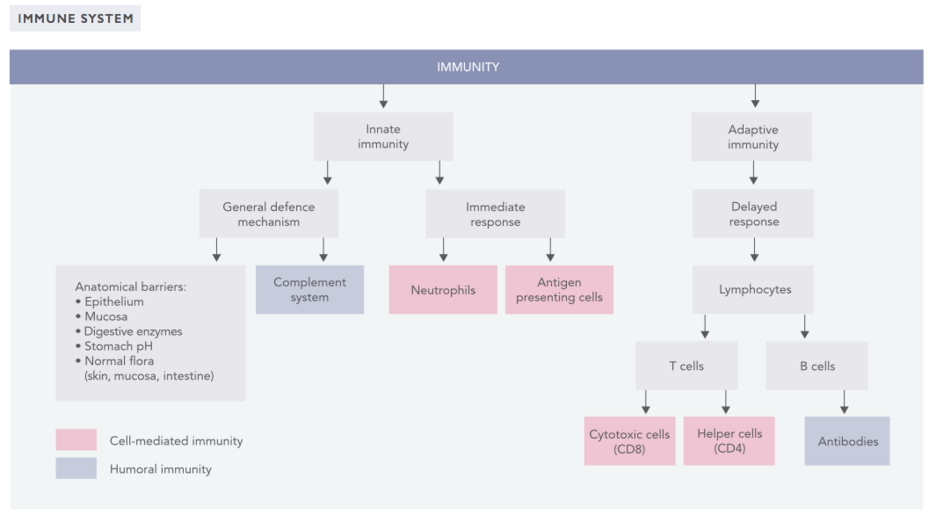
Although functioning as a cohesive system, immunity comprises various parts. A rough distinction between innate (nonspecific) and adaptive (specific) immunity can be made.
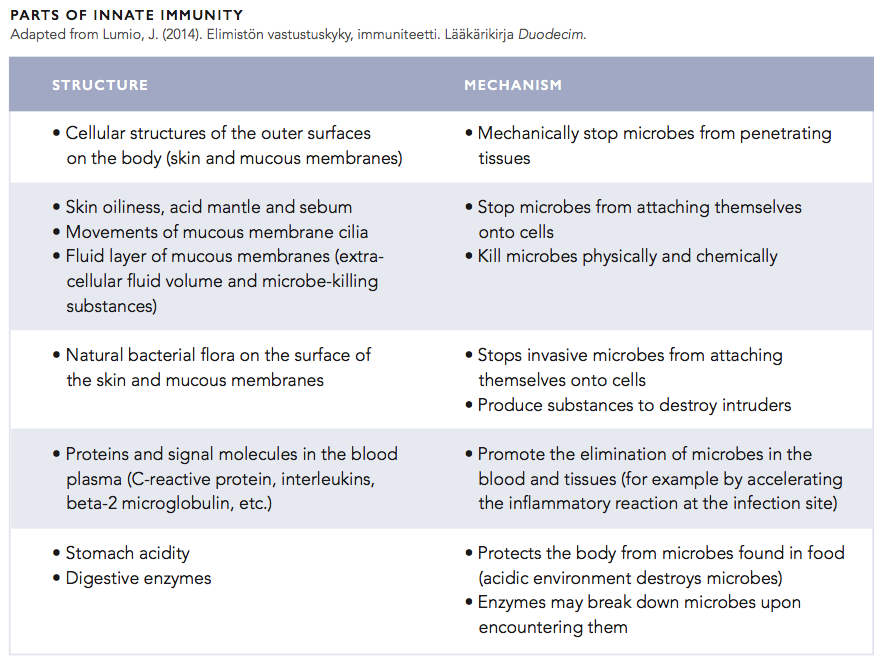
As its name implies, innate immunity is what a person is born with. It is also affected by the vaccinations received and the foreign matter and microbes the person is exposed to during their lifetime. Innate immunity functions quickly, effectively and consistently.
On the other hand, adaptive immunity activation is delayed by a few days in the event of detecting a foreign pathogen.
Factors affecting immunity
Hereditary immunity deficiencies or disorders are relatively rare. Impaired immunity is usually caused by environmental factors and general health factors.
General immunity-impairing factors include chronic sleep deprivation, lack of physical exercise, poor diet, chronic stress, social isolation, and negative thoughts. Despite conventional wisdom, changes in ambient temperature do not appear to have a significant immunity-impairing effect. In fact, changes in temperature may even boost the function of the immune system. Isolated studies have found a link between a low nasal cavity temperature and the accelerated multiplication rate of the rhinovirus.
Medicine-related immunity-impairing factors include antibiotics, cancer and arthritis medication, and cortisone treatments. Unnecessary antibiotics interfere with natural bacterial flora and may increase the risk of infection. Similarly, extended long-acting cortisone treatments for various inflammatory conditions and diseases such as asthma and arthritis may impair the immune response and increase the risk of bacterial and fungal infections.
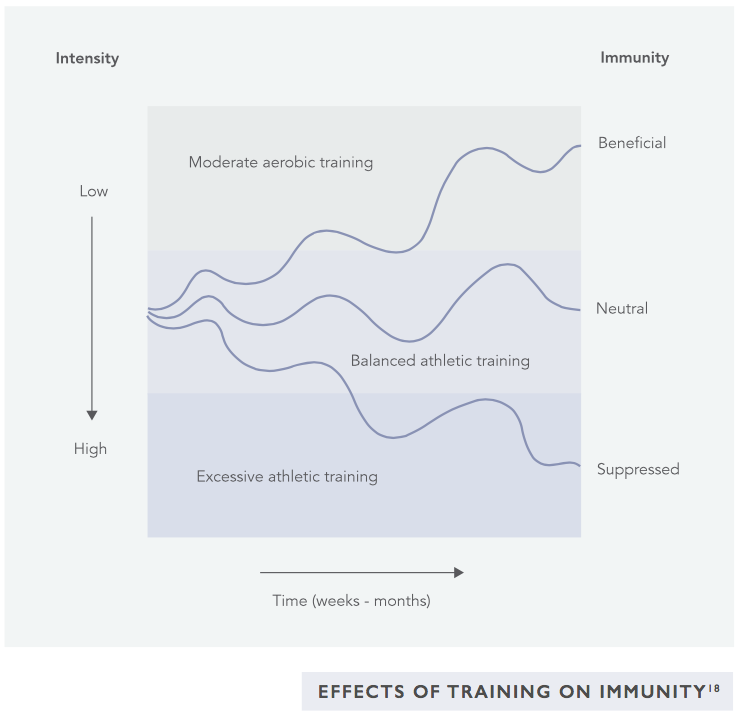
Exercise is a double-edged sword. On the one hand, exercise strengthens immunity – on the other hand, overtraining may also impair it. Symptoms of overtraining include impaired performance, chronic fatigue, frequent illness, impaired sleep quality, and mood swings. Overtraining may lead to an imbalance in which humoral immunity becomes excessively active at the expense of cell-mediated immunity.
Typical symptoms of overtraining individuals include a drop of 5–10 units in the maximum heart rate, a decreased level of noradrenaline in the urine and a decrease in the lactic acid, glutamine, natural killer cell, white blood cell and immunoglobulin levels in the blood.
How to balance immunity for optimal health
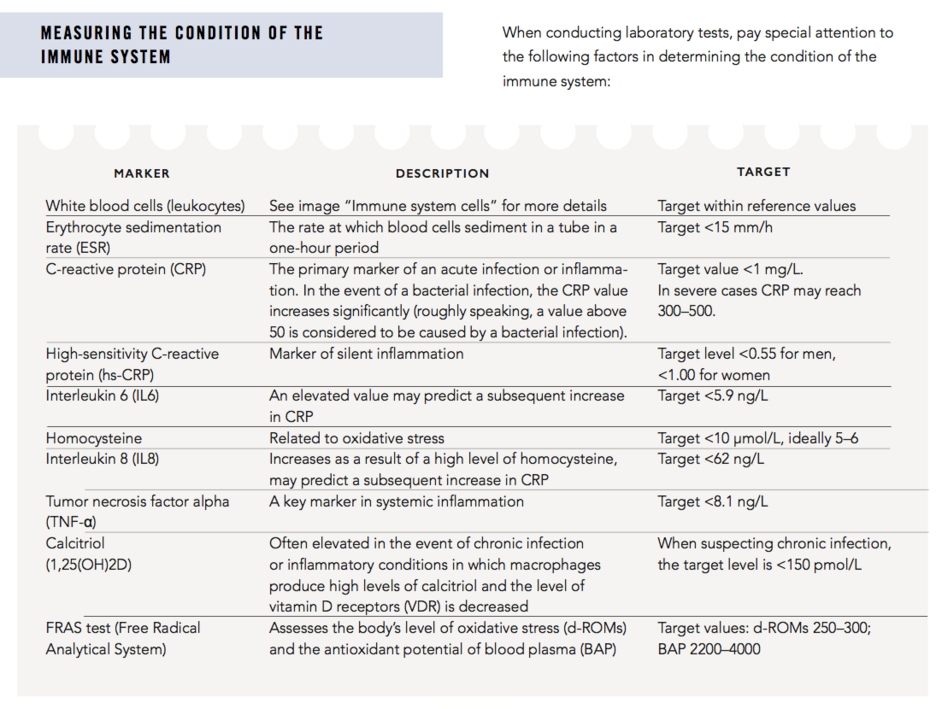
Improving one’s immunity primarily involves balancing the immune system. Many health products are marketed with claims of immunity-boosting properties. However, it is crucial to understand that many allergies, autoimmune diseases, and other inflammatory conditions are in fact symptoms of an overactive immune system. For example, an overactive immune system can be felt at the first signs of a cold. Deaths caused by some viruses (including Ebola) are due to the over-activation of the immune system, also known as a cytokine storm.
Correct these immunity-impairing factors:
- Chronic sleep deprivation
- Lack of physical exercise
- Poor diet
- Chronic stress
- Lack of social contacts
- Frequent negative thoughts and taking things too seriously
- Travel, flying, and changes in the environment
- Liberal consumption of alcohol
- Obesity
- Smoking
- Dehydration
Solutions for the above-mentioned factors:
- Regular sleep (7–9 hours) & improving sleep quality
- Regular and varied physical exercise
- At least 30 minutes each day (a combination of aerobic exercise and weight training)
- Regular sex is associated with higher IgA levels in the saliva
- Adequate but not excessive energy supply / optimal intake of micronutrients (vitamins A, D & B6; zinc and selenium in particular) / optimal intake of antioxidants
- Everyday stress management methods:
- Deep breathing exercises
- Sufficient rest
- Meditation
- Relaxing music
- Family and good support network and regular social interaction
- General fun and humor - frequent laughing lowers stress hormones and improves immunity
- Boosting immunity before a flight (see separate module on the topic) and optimal recovery from jet lag
- Reduce alcohol consumption and choose non-toxic alcohols while drinking
- Reduce abdominal obesity and lose weight
- Quit smoking and avoid passive smoking
- Adequate daily hydration and electrolyte intake
FASTING AND IMPROVED IMMUNITY
Fasting is an immemorial practice suggested as a miracle cure for various ailments. More recently, evidence has been found of fasting assisting the regeneration of parts of the immune system.
Prolonged fasting depletes the body’s glucose stores after which the body starts to produce ketone bodies from fat as an alternative fuel and repair damaged cells. In studies conducted on mice, regular fasting of 2–4 days per week for a period of 6 months decreased the function of the PKA enzyme (protein kinase A), making it possible for the immune system to rebuild damaged cells. Fasting has also been linked to longevity due to the decrease in PKA and IGF-1 (insulin-like growth factor 1).
Balance your immune system and health with these plants and foods
IMMUNE SYSTEM BOOSTING BERRIES AND FRUIT
- Pomegranate, bilberry and cranberry juice (polyphenols have an anti-TNF effect)
- Cherries (reduce CRP and IL6)
- Elderberries (may reduce the duration of the common cold: antiviral effects, increased cytokine TNF-α)
- Acai (rich in anthocyanins – similar to elderberries and bilberries)
IMMUNE SYSTEM BOOSTING MEDICINAL PLANTS
- Turmeric (anti-TNF effect; activates PPAR gamma receptors and decreases the occurrence of NF-kappaB protein)
- Ginger (decreases oxidative stress; inhibits prostaglandin synthesis and lowers the levels of several inflammatory cytokines such as IL1, TNF-α, and IL8 in the blood)
- Green tea (catechins such as EGCG have an anti-TNF effect; decreases the occurrence of NF-kappaB protein)
- Cacao (reduces CRP)
- Garlic (decreases the occurrence of NF-kappaB protein)
- Ginseng and notoginseng (decreases the occurrence of NF-kappaB protein)
- Substances affecting the cannabinoid receptors, such as Echinacea have an anti-TNF effect. Echinacea may lower the risk of upper respiratory tract infection and improve mucous membranes' impaired immunity, caused by hard exercise. Echinacea may also decrease both the risk and duration of the common cold.
- Astragalus or milkvetch (anti-TNF effect; decreases the occurrence of NF-kappaB protein)
IMMUNE SYSTEM BOOSTING FATS
- Extra virgin olive oil (reduces CRP and IL6)
- Omega-3 fats (EPA, DHA, and ALA reduce CRP)
- Extra virgin coconut oil (polyphenols reduce TNF-α, IL6, and CRP)
IMMUNE SYSTEM BOOSTING DIETARY SUPPLEMENTS
- Vitamin C (reduces CRP). Vitamin C appears to reduce the duration of the common cold when used shortly after the onset of symptoms. The benefits may be the most significant for those who exercise heavily or live in cold climates.
- Vitamin E supports the function of T cells. For example, 100 grams of almonds fulfill the daily vitamin E requirement.
- Vitamin D
- Vitamin B1 (reduces NF-kappaB)
- Magnesium (reduces hs-CRP)
- Zinc acetate may decrease the risk and duration of the common cold when a minimum daily dose of 75 mg is taken. Adequate zinc intake also reduces IL6 and cytokine TNF-α. Oysters are rich in zinc.
- Creatine (inhibits the increase of CRP and TNF-α)
- L-lysine (may reduce the susceptibility to activated HSV infection). The balance between lysine and arginine appears linked to herpes becoming active. Many notice a cold sore forming frequently after eating chocolate or nuts (a plentiful source of arginine).
- Probiotics may reduce the risk of illness
- Alpha-lipoic acid, glutathione, and N-acetylcysteine (may improve the function of the impaired immune system by boosting the enzyme function of the liver)