Optimal breakfast, lunch & snacks
Optimal breakfast
“One should not attend even the end of the world without a good breakfast.” – Robert A. Heinlein
It is said that breakfast is the most important meal of the day. Although many skip breakfast nowadays and practice intermittent fasting, a satiating high-quality breakfast can dramatically increase your performance and well-being.
The deepest essence of breakfast
An early morning meal is one of the most important cornerstones of the day. The breakfast composition can often be decided by yourself - at work or school, you may not be able to influence the contents of lunch, snacks or dinner accordingly. That's why having a ritual and a routine for breakfast all day is good. With the help of breakfast, you can make the most of the nutrients you need during the day and perform your tasks at good energy levels.
Energy Management
The most important thing about breakfast is how it particularly supports the first chores of the day. Blood glucose control is the most important physiological mechanism in the body that influences work-day balance and general alertness. Continuous blood glucose depletion in humans significantly affects e.g. fluctuations in moods.
Food's energy content and composition is essential if you are physically active in the morning. If you are planning to sit on a machine or at a meeting, it would be good to have the nutritive content of the breakfast to support a steady blood sugar level. Physical activity forgives, for example, breakfast containing carbohydrates.
When working in front of a computer and doing knowledge-intensive work, paying attention to the supply of fibers and nutrients is good. Fibers slow down nutrient absorption and improve bowel function. Nutritional foods generally support brain function.
Blood sugar control can be supported as follows:
- Eat low glycemic (GI) and insulin index (II) foods. These indices describe the effects of the food on blood sugar. For example, the GI of oatmeal is 60 and II 40, while the white toast is 100 and 100. Whole grain bread is not much better, 97 and 96. The egg is 42 and 31. Yogurt is 62 and 115, respectively.
- Increase the number of fibers to slow food absorption (Chia, psyllium, leaf green).
- Enjoy breakfast with blood sugar-balancing nutrients and spices. Foods, especially blueberries, apple cider vinegar, mushrooms, Chia seeds, ginger, lemon, turmeric, and cocoa balance blood sugar. Among the supplements are psyllium fiber, ginseng root, resveratrol, and MCT oil. It is worth mentioning fenugreek, and especially cinnamon, which reduces the fasting blood sugar by up to 29 %. Coffee and tea have also been shown to have blood sugar-balancing effects.
- Adding fats about the amount of carbohydrates and protein. The body flame burns more evenly and longer with the help of fat - carbohydrates are like gasoline to flames and excess protein can also tire you.
Avoid these if your blood sugar control is important to you:
- Fruit juices (elevates blood sugar rapidly)
- The so-called light products (which are usually sugar products in practice)
- Wheat products (fast carbs increase blood sugar)
- Milk (lactose and galactose raise blood sugar fast)
- Jams and other sweet spreads
- Potato and rice
Ideally, the blood sugar level remains constant until lunch and eating is optional. If you have a screaming hunger already at 11 a.m., you are doing something wrong.
Optimal lunch
“The lunch break helps you stay focused and energized throughout the day by recharging both your body and your mind." – Miriam Jacobs
Lunch and lunch break is a good way to get a well-earned break for the workday while relaxing and removing your thoughts about work. At best, the lunch break is a lunch hour – you spend a good amount of time and eat in peace alone or in inspiring company. At worst, the lunch break is a quick grab-and-go bite, which leaves the body and mind with no real food. Having a good and peaceful lunch has a long-lasting impact on the rest of the working day regarding energy supply, blood sugar control, and balancing brain neurotransmitters.
Some studies have found that people who do not eat lunch are more likely to gain weight because they overeat in the evening, compensating for the lack of nutrition and energy due to missed lunch.
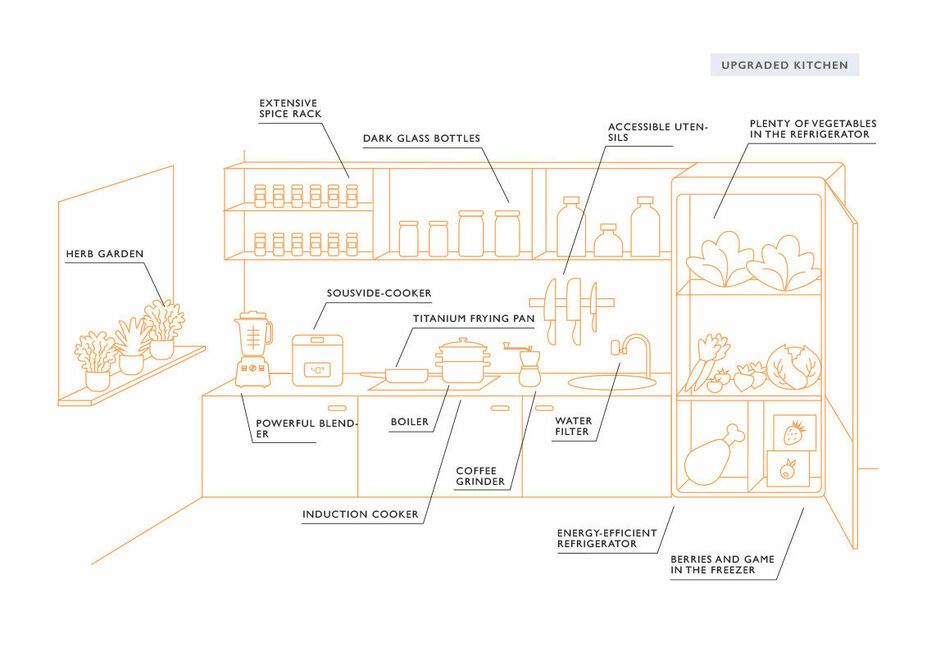
From the blood glucose control and alertness point of view, it is advisable for lunch to emphasize protein-rich foods and an abundance of vegetables and fibers and to avoid carbohydrates and fast-acting blood sugar-boosting foods. Protein-rich foods also contain plenty of amino acids that support the production of neurotransmitters. In particular, optimizing dopamine and acetylcholine mediators supports motivation, learning and overall performance during the working day.
Create an optimal lunch using the following principles:
- Choose a high-quality source of protein (wild or organic fish, game, organic poultry, organic lamb, organic beef, etc. or a high-quality source of vegetable protein like tempeh, natto or lentils)
- Load your plate with a wide variety of fibrous vegetables
- Use a high-quality oil to support fatty acid intake (like extra virgin olive oil or hempseed oil)
- Add in some nuts and/or berries as a dessert and 1–2 bites of dark (or raw) chocolate
Optimal snacks
“I don't snack. I don't generally eat sweets or drink soda. I never eat between meals or even before big ones." – Anthony Bourdain
The late top chef may not have felt the need for snacking, but snacks have their place in the diet to maintain energy levels without eating a big meal. Especially when traveling, working, studying or exercising, the need for snacks is emphasized.
Snack to support energy levels
Eating can make you tired. The health effects of fasting are well known and can support performance, but with a particularly stressful day, snacks have a distinct role to play. By designing them very well, they create energy without taking it from you.
Drinking coffee or tea can keep hunger at bay for a long time and maintain vitality. For many, coffee is the most common snack. Combined with fats, they work well as a ketosis maintenance tool. The fatty coffee, matcha-latte or turmeric latte is the most energy-dense and balanced snack.
A well-designed snack treats the taste buds on all axes, makes you satisfied but not sleepy, supports blood sugar levels without elevating it too much, gives energy without taking it, and can be a culinary enjoyment.
Avoid "kryptonite" snacks
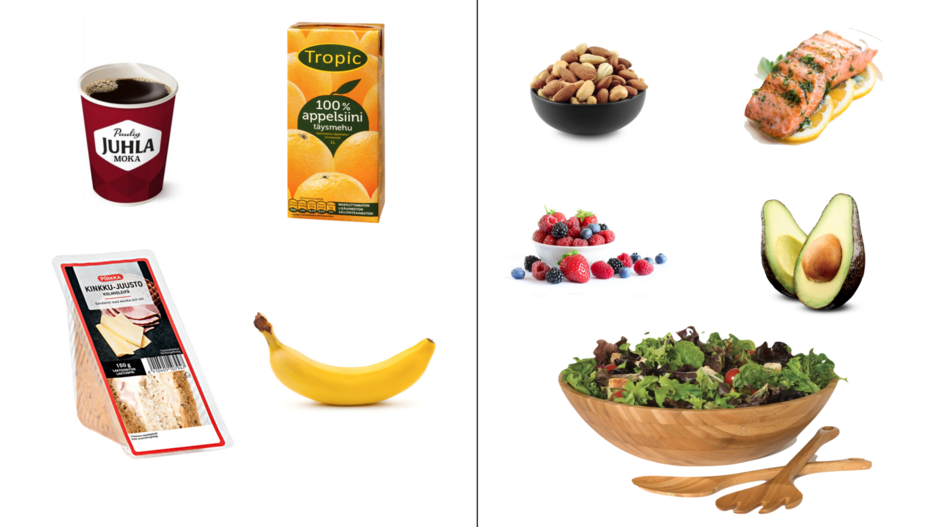
In the Superman movie, kryptonite took power from the hero. An ineffective snack is like kryptonite, which eventually robs your energy levels. Many "snacks" are full of rapidly absorbed carbohydrates that give you quick energy. If you are not much athletic, they will eventually take the power with the sugar peak. Here are some examples:
- Cake, Donut or Muffin, consisting mainly of flour, milk, and sugar
- Milk chocolate with lots of sugar and fillers
- Lots of fructose-containing fruit juices
- Potato chips
- Sugar candies
- An ice cream consisting mainly of sugar and cream
- "Energy" bars
- Sodas and energy drinks
- Sandwiches
- Other processed foods impregnated with sugar and flavor enhancers
Nuts and seeds
Here is a list of healthy nuts and seeds and their special nutritional features.
- Pecans: plant sterols and lots of vitamins
- Cashew nuts: most iron and zinc
- Hazelnuts: most of the fiber and a lot of micronutrients (might create an allergic reaction though)
- Almonds: most calcium
- Pistachio: a lot of potassium, beta-carotene, and lutein, and acts as a prebiotic for the intestine
- Brazil nuts: a lot of selenium
- Macadamia nuts: a lot of thiamine, a lot of monounsaturated fatty acids and very little carbohydrates
- Walnuts: lots of ALA fatty acids (short-chain omega 3)
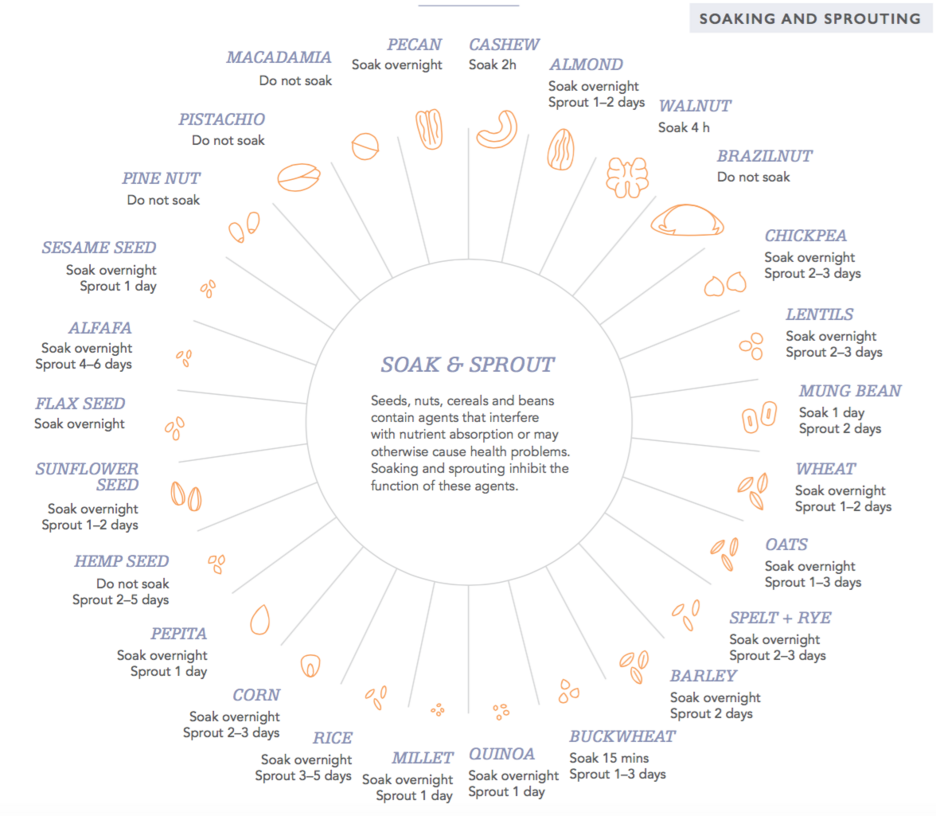
Nuts are very nutritious and contain protein, good fatty acids, minerals, fiber, and vitamins E and B. Especially when using nuts, it is a wise idea to soak and dry them before use. This light processing facilitates nuts' digestion and absorption and removes possible anti-nutrients. Avoid rancid and roasted or flavored nuts and nuts with an origin you cannot be sure of.
Peanut is not really a nut, but a legume. Although they contain niacin that reduces fatigue, we do not recommend using peanuts in large quantities due to their intestinal-sensitizing antinutrients.
Also, select the appropriate seeds:
- Peeled sunflower seeds
- Peeled or whole hemp seeds: a good source of protein and magnesium
- Whole Flaxseeds: can help with constipation and balance blood sugar
- Whole or peeled sesame seeds
- Peeled pumpkin seeds (especially Styrian variety): high in zinc and magnesium
- Peeled pine seeds
- Whole chia seeds: lots of manganese, magnesium, and calcium
It is good to remember that seeds can accumulate a lot of heavy metals, especially nickel and cadmium. It is therefore officially recommended a maximum of two tablespoons per day. Peeled seeds are generally better if heavy metals are considered. Like nuts, soaking can improve the absorbability and reduce the number of anti-nutrients.
Fruits and berries
Fruit is often recommended as a snack. We would rather recommend them as they are rather than squeezed into juice – this way the blood glucose effect is more balanced.
Mangoes, figs, grapes, and bananas have been processed to contain a lot of fruit sugar. Instead, for example, nectarines, peaches, or apples are better choices for balancing sugar and nutrients. Dates contain a lot of sugar and the most potassium per kilogram of fruit.
Some fruits can be tactically used for certain health effects. For example, kiwi fruit has improved the growth of probiotic bacteria in the intestine. Kiwi also has five times more vitamin C than, for example, orange. So would you eat five oranges, or one kiwi if vitamin C intake was essential?
Olives or avocados are also unconditional for snack foods - their fatness and high fiber content maintain long-lasting satiety.
Berries should be consumed in different dietary recommendations around 150–200 g daily. Generally, berries are rich in vitamins, flavonoids, polyphenols, anthocyanins, and insoluble fiber, and contain less sugar than fruit. The dark polyphenols in berries support the immune system.
For example, blueberries can also increase cognitive performance and reduce eye fatigue. Similar effects have also been found in other dark berries.
Fresh or freeze-dried berries are therefore a great choice for snacks. Avoid foreign dried and sweetened berries.
Yogurts
Several new yogurts have arrived in the shops, which are not made of cow's milk. These include yogurts made from coconut or goat milk, often more suitable for people sensitized to cow's milk proteins and lactose.
Yogurts are a good probiotic snack, especially a conveyor for berries, nuts, and seeds, as long as you avoid low-fat yogurts. In low-fat yogurts, fat is often replaced by fruit sugar. For the same reason, it is advisable to prefer unflavoured yogurts, as the flavor often comes from sugar-containing jams.
The added protein-containing yogurts are, in theory, a good idea, but implementation in the store selection is often based on low-quality protein sources and vague structure-enhancing additives. If you want to increase the protein content of yogurt by yourself, mix high-quality protein powders (like grass-fed whey protein and/or hydrolyzed collagen protein) with yogurt. Also, try adding hemp and/or chia seeds to the yogurt.
Upgraded trail mix
- Use 2x more nuts as other ingredients to bring mouthfeel and provide the main source of protein (e.g. cashew)
- Soak and dry the nuts again to improve absorption.
- Dried berries such as Inca and/or mulberries bring freshness. Also, try freeze-dried domestic berries.
- Cocoa bits bring bitterness. Coated with coconut sugar, they also bring a bit of sweetness.
- Pinch of salt to balance the potassium of the nuts and raise different flavors.
- Spices like chili and curry. Also try Cajun spice mix, Mediterranean herb mixture or black pepper.
- Add a teaspoon of lemon juice if the spices do not stick properly.
DIY snack bag
Create your snack bag, which you can put into your car or carry while traveling. You can put into your bag, for example, these items:
- Instant drinks, such as mushroom extracts or high-quality instant coffee
- Probiotics, prebiotics and digestive enzymes
- High-quality dark chocolate
- Nutritional supplements can be mixed with drinks, salads, yogurts, and smoothies. For example, berry and green powders
- Snacks like self-made Trail Mix
- Cold section for snack drinks
- Portable blender
- Aeropress for coffee lovers