About Omega-3 Index
The Omega-3 Index measures the amount of EPA (eicosapentaenoic acid) and DHA (docosahexaenoic acid) in red blood cell membranes, expressed as a percentage of total fatty acids. An Omega-3 Index of 8-12% is believed to be associated with the lowest risk of chronic disease, but it’s crucial to note that more does not necessarily mean better.
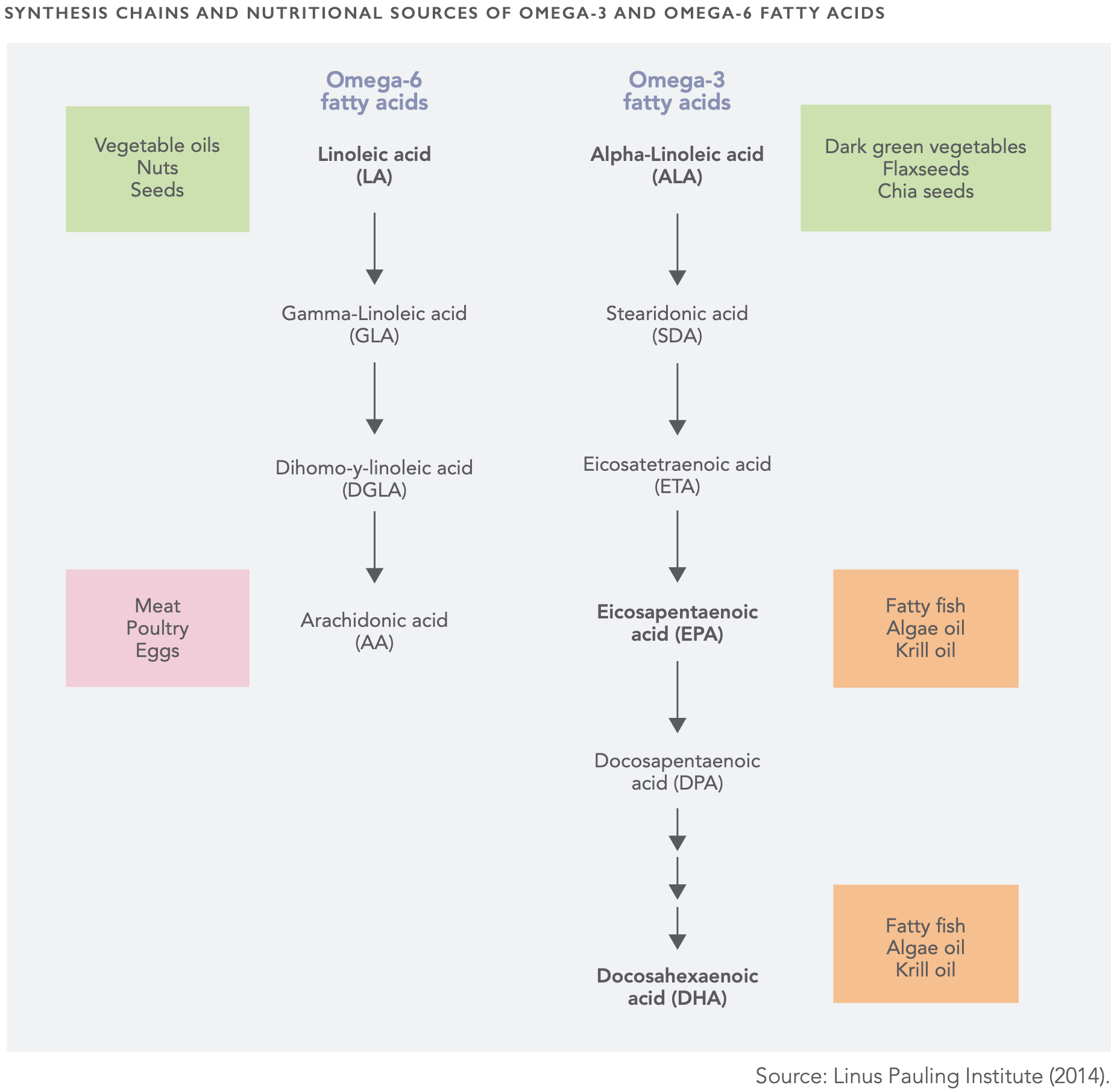
Omega-3s are polyunsaturated fatty acids important for good health. Among the three main omega-3s alpha-linolenic acid (ALA), eicosapentaenoic acid (EPA) and docosahexaenoic acid (DHA). Only ALA is considered an essential fatty acid the body cannot synthetize and must therefore be provided through diet. Note that although the body can synthesize EPA and DHA from ALA, it is only done in a small amount. It is therefore recommended to get enough EPA and DHA from the diet. Studies show that women are better at converting about 21 % of dietary alpha-linolenic acid into EPA and 9 % of dietary alpha-linolenic acid into DHA. The corresponding values for men are only 8 % and 0-4 %. Higher estrogen levels in the body positively affect conversion.
Omega-3 Index corresponds to the omega-3s EPA and DHA amount in red blood cell membranes, expressed as a percentage of total fatty acids. Omega-3 Index is an indicator of better overall health and a higher omega-3 Index has, among others, been associated with a decreased risk for cardiovascular diseases.
Omega-3 fatty acids are an integral part of cell membranes throughout the body and have many benefits for our bodies, brains and hearts. Omega-3s, particularly EPA and DHA, play crucial roles in the brain's development, functioning, and aging. EPA and DHA also participate in several metabolic signaling pathways, producing anti-inflammatory molecules.
EPA and DHA are not only crucial for normal brain function, but also for heart function since they promote healthy blood flow. Also, getting more EPA and DHA from the diet can help lower triglyceride levels, decreasing the risk of heart disease. They also serve as precursors for different compounds needed for example to support healthy respiratory function and intestinal barrier integrity.
Biostarks reference ranges for Omega-3 Index
- Omega-3 Index (w-3Ind-S): 8-15 %
Scientific references:
- Harris, W. S. (2010). The omega-3 index: clinical utility for therapeutic intervention. Current cardiology reports, 12, 503-508.
- Dempsey, M., Rockwell, M. S., & Wentz, L. M. (2023). The influence of dietary and supplemental omega-3 fatty acids on the omega-3 index: A scoping review. Frontiers in Nutrition, 10, 1072653.
- Butt, R. W., Cockerline, C. A., Rowe, W. J., & Laidlaw, M. (2015). Are All Omega-3s Created Equal? Comparison of the Bioavailability and Efficacy of Four Omega-3 Preparations. Circulation, 132(suppl_3), A16904-A16904.
- Davidson, M. (2013). Omega-3 fatty acids: new insights into the pharmacology and biology of docosahexaenoic acid, docosapentaenoic acid, and eicosapentaenoic acid. Current Opinion in Lipidology 24 (6): 467–474.
- Burdge, G. (2004). α-Linolenic acid metabolism in men and women: nutritional and biological implications. Current Opinion in Clinical Nutrition & Metabolic Care 7 (2): 137–144.
- Garcia-Hernandez, V. et al. (2013). Effect of omega-3 dietary supplements with different oxidation levels in the lipidic profile of women: a randomized controlled trial. International Journal of Food Sciences and Nutrition 64 (8): 993–1000.
- Fontani, G. et al. (2005). Cognitive and physiological effects of Omega‐3 polyunsaturated fatty acid supplementation in healthy subjects. European Journal of Clinical Investigation 35 (11): 691–699.
- Grosso, G. et al. (2014). Role of omega-3 fatty acids in the treatment of depressive disorders: a comprehensive meta-analysis of randomized clinical trials. PloS One 9 (5): e96905.
- Serhan C. (2014). Pro-resolving lipid mediators are leads for resolution physiology. Nature 510 (7503): 92–101.
- Xiao, B. et al. (2021). Eicosapentaenoic acid (EPA) exhibits antioxidant activity via mitochondrial modulation. Food Chemistry 131389.
- Stonehouse, W. et al. (2013). DHA supplementation improved both memory and reaction time in healthy young adults: a randomized controlled trial. The American of Clinical Nutrition 97 (5): 1134–1143.
- Cole, G. & Frautschy, S. (2010). DHA may prevent age-related dementia. The Journal of Nutrition 140 (4): 869–874.
- Yurko-Mauro, K. (2010). Cognitive and cardiovascular benefits of docosahexaenoic acid in aging and cognitive decline. Current Alzheimer Research 7 (3): 190–196.
- Wen, Y. & Dai, J. & Gao, Q. (2014). Effects of Omega-3 fatty acid on major cardiovascular events and mortality in patients with coronary heart disease: a meta-analysis of randomized controlled trials. Nutrition Metabolism and Cardiovascular Diseases 24 (5): 470–475.
- Kotwal, S. & Jun, M. & Sullivan, D. & Perkovic, V. & Neal, B. (2012). Omega 3 fatty acids and cardiovascular outcomes: systematic review and meta-analysis. Circulation: Cardiovascular Quality and Outcomes 5 (6): 808–818.
- Miller, P. & Van Elswyk, M. & Alexander, D. (2014). Long-chain omega-3 fatty acids eicosapentaenoic acid and docosahexaenoic acid and blood pressure: a meta-analysis of randomized controlled trials. American Journal of Hypertension 27 (7): 885–896.
- Bernstein, A. & Ding, E. & Willett, W. & Rimm, E. (2012). A meta-analysis shows that docosahexaenoic acid from algal oil reduces serum triglycerides and increases HDL-cholesterol and LDL-cholesterol in persons without coronary heart disease. The Journal of Nutrition 142 (1): 99–104.
- Larsson, S. & Orsini, N. & Wolk, A. (2012). Long-chain omega-3 polyunsaturated fatty acids and risk of stroke: a meta-analysis. European Journal of Epidemiology 27 (12): 895–901.