About NAD+
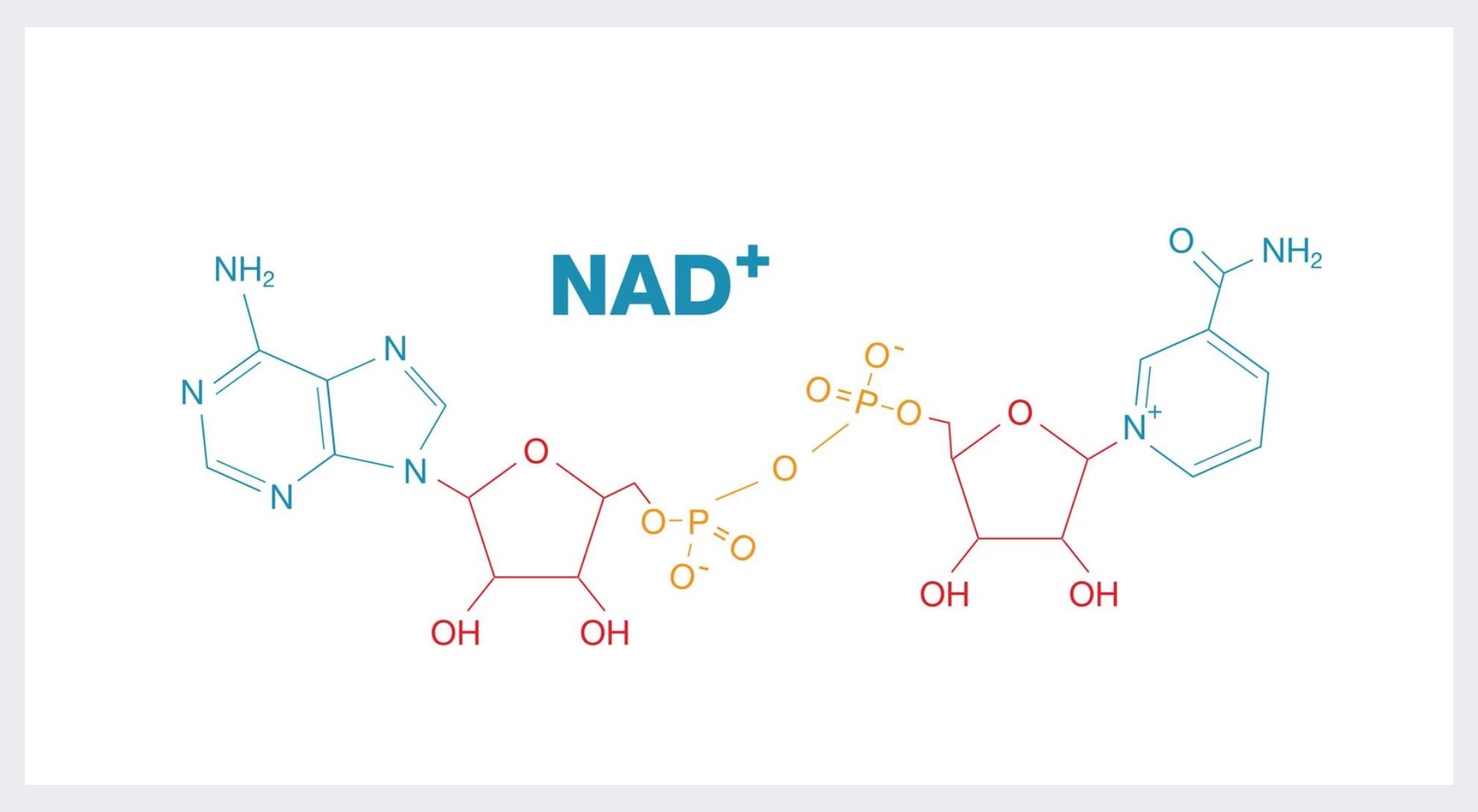
NAD⁺ was first discovered during yeast fermentation. Since its discovery, it has been found that NAD⁺ (nicotinamide adenine dinucleotide) is a significant cofactor that partakes in virtually all cellular reactions.
NAD⁺ is a coenzyme that plays an important role in many cellular processes, including energy metabolism, cellular signaling, DNA repair, and the regulation of gene expression.
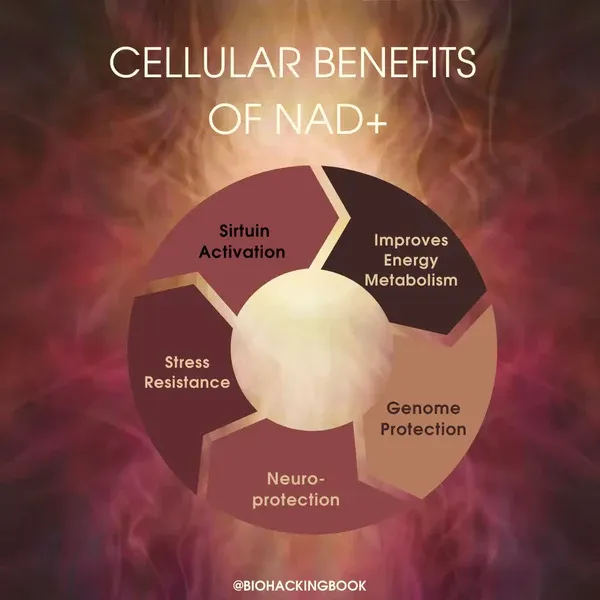
NAD⁺ is involved in the electron transport chain, which is the process by which cells generate energy in the form of ATP. NAD⁺ levels decline with age and this has led to the hypothesis that NAD⁺ is a key regulator of the aging process, with some studies suggesting that healthy NAD⁺ levels are a critical factor for cell survival with low levels associated with a variety of health problems, including insulin resistance, fatigue, inflammation, poor stress resistance and neurodegeneration.
NAD has two forms, NAD+ and NADH, which both command electron transfer reactions:
- NAD+ is an oxidizing agent that picks up electrons from other molecules and thus becomes reduced
- NADH is a reducing agent that forms from reduced NAD+ and is then used to donate electrons to other molecules, thus becoming NAD+ againElectrons of NADH can store energy, which gets converted into ATP in the mitochondria during a process called oxidative phosphorylation
Ideally, NAD+ is in a homeostatic state of biosynthesis, consumption, recycling and degradation at both cellular and systemic levels. Human cells can synthesize NAD+ de novo from tryptophan by the kynurenine pathway or from nicotinic acid (NA) by the Preiss-Handler pathway. However, most NAD+ is recycled from nicotinamide (NAM), NA, nicotinamide riboside (NR) and nicotinamide mononucleotide (NMN) in the Salvage pathway to maintain the cellular NAD+ levels. NAD+ can be reduced into NADH in various metabolic processes, including glycolysis, fatty acid oxidation and the Krebs cycle.
NAD⁺ serves as the main substrate for the sirtuins to perform their enzymatic activity, with sirtuins having been shown to regulate gene expression, improve insulin sensitivity, reduce inflammation, and protect against age-related diseases, with some research even suggesting that sirtuins may play a role in regulating the aging process itself.
Based on recent science, a decrease in NAD+ levels is associated with aging. Commonly, NAD+ levels drop to less than half after age 60 compared to levels in the twenties. The big question is why NAD+ levels decline in the first place. There are a couple of theories trying to explain it. However, the latest and most supported theory is that NAD+ levels decline with age because the overactivity of the NAD-consuming enzyme CD38 destroys it. Low NAD+ status is also known to inhibit the body’s immune system and natural defense mechanisms.
Dysregulation of the NAD+ levels has been associated with metabolic and aging-related diseases, including neurodegeneration, defective immune responses and cancer.
Lifestyle factors that decrease NAD+ levels:
- Circadian rhythm mismatches
- Chronic inflammation and oxidative stress
- Constant caloric surplus (eating too much all the time) – higher NADH, lower NAD+
- Elevated blood sugar and insulin levels
- Chronic alcohol use
Best ways to increase NAD+ levels in the body:
Intracellular NAD+ levels are generally maintained between 0.2 and 0.5 mM, depending on the cell type or tissue. However, the concentration and distribution of NAD+ can fluctuate in response to diverse physiological stimuli and cellular stresses.
- Practice regular (intermittent) fasting and caloric restriction
- Activate ketogenesis in the body and have regular glucose restriction periods
- Exercise regularly
- Practice heat alteration (see earlier)
The best food sources of NAD+ precursors include:
- Raw and fermented dairy (high in NR)
- Fatty fish such as salmon, sardines, trout and mackerel (high in niacin)
- Reindeer, beef and chicken liver (high in niacin)
- Pork and turkey (high in tryptophan and niacin)
- Beef (high in niacin)
Supplement with NAD+ precursors:
- Nicotinamide riboside (NR): optimal dose 300 mg per day
- Nicotinamide mononucleotide (NMN): optimal dose 250–500 mg per day (Liposomal dose is about 10x times smaller)
- Use with trimethyl glycine (TMG) for optimal methylation process
- Niacinamide (NAM): optimal dose 250–500 mg per day
- Nicotinic acid (NA): optimal dose 250–500 mg per day
There is no long-term data on the safety of continuous supplementation with NAD+ precursors, particularly NR and NMN.
Certain herbs that help with NAD+ recycling and inhibiting NAD-consuming CD38 enzyme:
Parsley Leaf Extract:
- Parsley is rich in apigenin, a flavone shown to increase NAD+ levels.
- Apigenin works by inhibiting CD38, an enzyme that degrades NAD+. By inhibiting CD38, apigenin helps maintain higher levels of NAD+.
- Additionally, apigenin may enhance the activity of the NAMPT enzyme, which is involved in the salvage pathway of NAD+ synthesis, further boosting NAD+ levels.
Green Tea Extract:
- Green tea contains catechins, particularly epigallocatechin gallate (EGCG), known for its antioxidant properties.
- EGCG has been found to inhibit the activity of CD38, thus reducing NAD+ degradation.
- Moreover, EGCG might also promote the expression of specific genes involved in the NAD+ biosynthesis pathway, thereby enhancing NAD+ production.
Sophora Japonica:
- Sophora japonica is rich in quercetin, a flavonoid that also inhibits CD38, thereby conserving NAD+ levels.
- Quercetin may enhance SIRT1 activity, a class of enzymes that require NAD+ to function and are involved in various cellular processes, including aging and inflammation.
- By enhancing SIRT1 activity, quercetin indirectly supports the maintenance of NAD+ levels.
Biostarks reference ranges for NAD+
- NAD⁺ (NAD-RBC-L): 62-150 ug/gHb
Scientific references:
- Navas, L. & Carnero, A. (2021). NAD+ metabolism, stemness, the immune response, and cancer. Signal Transduction and Targeted Therapy 6 (1): 2.
- Stein, L. & Imai, S. (2012). The dynamic regulation of NAD metabolism in mitochondria. Trends in Endocrinology and Metabolism 23 (9): 420–428.
- Xie, N. et al. (2020). NAD+ metabolism: pathophysiologic mechanisms and therapeutic potential. Signal Transduction and Targeted Therapy 5 (1): 1-37.
- Schultz, M. & Sinclair, D. (2016). Why NAD(+) Declines during Aging: It's Destroyed. Cell Metabolism 23 (6): 965–966.
- Zhang, M. & Ying, W. (2019). NAD+ deficiency is a common central pathological factor of a number of diseases and aging: mechanisms and therapeutic implications. Antioxidants & Redox Signaling 30 (6): 890–905.
- Xie, N. et al. (2020). NAD+ metabolism: pathophysiologic mechanisms and therapeutic potential. Signal transduction and targeted therapy 5 (1): 1-37.
- Poljsak, B. & Kovač, V. & Milisav, I. (2020). Healthy Lifestyle Recommendations: Do the Beneficial Effects Originate from NAD+ Amount at the Cellular Level? Oxidative Medicine and Cellular Longevity 2020: 8819627.
- Rodgers, J. et al. (2005). Nutrient control of glucose homeostasis through a complex of PGC-1α and SIRT1. Nature 434 (7029): 113–118.
- Trammell, S. & Yu, L. & Redpath, P. & Migaud, M. & Brenner, C. (2016). Nicotinamide riboside is a major NAD+ precursor vitamin in cow milk. The Journal of Nutrition 146 (5): 957–963.
- Peek, C. et al. (2013). Circadian clock NAD+ cycle drives mitochondrial oxidative metabolism in mice. Science 342 (6158): 1243417.
- Sahar, S. & Nin, V. & Barbosa, M. & Chini, E. & Sassone-Corsi, P. (2011). Altered behavioral and metabolic circadian rhythms in mice with disrupted NAD+ oscillation. Aging 3 (8): 794–802.
- Conlon, N., & Ford, D. (2022). A systems-approach to NAD+ restoration. Biochemical pharmacology, 198, 114946.
- Conlon, N. J. (2022). The role of NAD+ in regenerative medicine. Plastic and Reconstructive Surgery, 150(4 Suppl), 41S.