Kidneys
KIDNEYS
This section discusses laboratory markers affecting the body's fluid balance and regulating blood pressure.
BODY FLUID BALANCE
Approximately 65 % of the human body consists of water. Dehydration by just a few percentage points significantly impairs general performance. Regulation of the body's fluid balance is one of the primary regulation mechanisms in the body.
A human being can survive without food for extended periods but as little as 3–5 days without fluids is likely to lead to death. Similarly, during and after exercise, the sufficient intake of fluids is of utmost importance. The body can only absorb a relatively small amount of fluid under exertion. This volume varies from 300 to 1,200 milliliters per hour.
According to official guidelines, one should drink at least 1–1.5 liters of water daily, preferably 2–3 liters depending on daily activity level and air temperature. In addition, the daily fluid intake should be increased by at least a liter per hour of exercise. The elderly should also drink more fluids due to the impaired ability of their kidneys to filter urine.
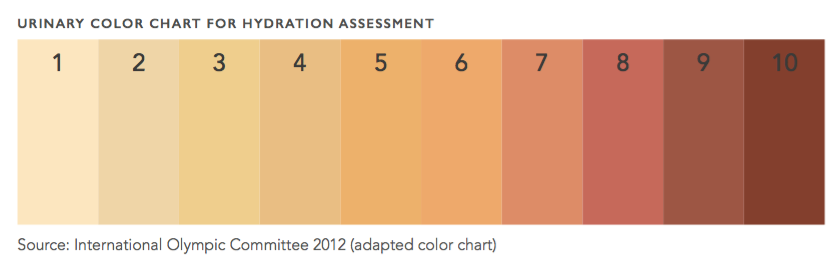
A simple indicator of sufficient hydration is the color and volume of urine. Light-yellow urine and a large urinary volume indicate that the body's fluid balance is correct. Conversely, dark-colored urine and a small urinary volume are indicative of dehydration. On the other hand, urine that is completely colorless indicates that the fluid intake is too large in volume or too rapid.