Intermittent fasting & ketosis
Intermittent fasting (IF)
Intermittent fasting means fasting for a significant portion of the day (for example 16 hours) and consuming the daily food intake during the remaining eating window (for example 8 hours). The simplest way to implement this is to extend the overnight fast by skipping breakfast and enjoying the afternoon's first meal.
The concept of intermittent fasting counters the trend of “six small meals a day” promoted by the food industry and fitness culture of today. Grazing is often rationalized with claims of activating the metabolism and making weight management easier. However, no scientific basis has been found for such claims. In fact, the basal metabolic rate (BMR) increases slightly after a 36-hour fast – it is only after 72 hours that the BMR begins to slowly decrease.
Intermittent fasting helps achieve the desired calorie restriction when the goal is removing waste products from the body (autophagy) or weight loss. Improvements in regulating sugar metabolism have also been reported with intermittent fasting.
According to one study, there were no significant differences in the energy expenditure of individuals who ate frequently (6 times per day) compared to those who ate more infrequently (2 times per day). The same study found that those who fasted in the morning naturally ate slightly less overall and consumed slightly smaller carbohydrates.
From an evolutionary perspective, human beings evolved to eat when there is food available (usually in the evening) – the rest of the time was spent acquiring the food (in the morning and during the day).
In practice, intermittent fasting works well as it allows for the consumption of satisfying meals during the eating window while maintaining a moderate overall energy intake. For example, the consumption of food (particularly carbohydrates) in the evening significantly reduces the levels of stress hormones and promotes sleep as well as stabilizing the secretion of leptin, ghrelin, and adiponectin (burning fat). Consuming meals later in the evening also activates the parasympathetic nervous system, calming the body and making it easier to fall asleep.
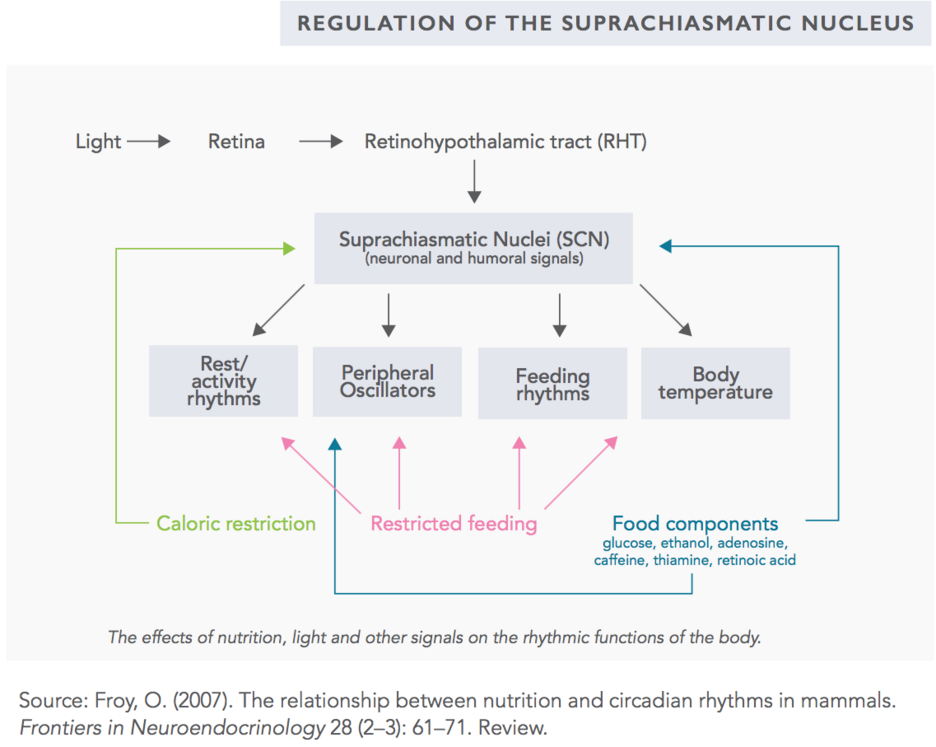
Intermittent fasting (and calorie restriction) may also balance the suprachiasmatic nucleus (SCN) function that regulates the body's circadian rhythm. The primary factor in SCN regulation is light (particularly sunlight). Intermittent fasting (or fasting in general) is not generally recommended for individuals under 18 years of age, pregnant, breastfeeding, severely fatigued or suffering from chronic fatigue syndrome.
Here is a sample pattern of IF for a person who is physically active and works at the office:
- Fasting overnight and delaying the first meal as much as possible (usually until sometime between 3 PM and 6 PM depending on the timing of the previous meal)
- While fasting, drink plenty of fluids such as mineral water (rich in minerals, delays hunger)
- Hunger may be further delayed before the first meal by consuming an apple which is rich in fiber and relatively low energy (< 50 kcal) – consuming a cucumber may also delay hunger (negligible calorie intake) and increase the intake of potassium, a mineral important for the body
- The first meal should consist mainly of protein, fibrous vegetables and fat, and a small amount of carbohydrates (if desired)
- The second (and last) meal, consumed between 8 PM and 11 PM, should include some carbohydrates as well as suitable amounts of fat and protein – when consumed close to bedtime it can help optimize sleep
- Physical exercise is often timed either at the end of the fasting period in the afternoon or after the first meal later in the evening
When fasting, water, tea, coffee, and mineral water are often consumed to maintain fluid balance. Low-energy green juices are also good as they contain essential micronutrients (see recipes below). Highly active or athletic people may also consume essential amino acids (EAA) in tablet or powder form to maximize recovery.
There are various methods of intermittent fasting:
- Fasting for 24 hours 1–2 times per week (”Eat Stop Eat”)
- Fasting for 20 hours followed by a 4-hour eating window (”The Warrior Diet”)
- Fasting for 36 hours followed by a 12-hour eating window (”The Alternate-Day Fast”)
- Fasting for 16 hours followed by an 8-hour eating window (”Leangains”)
- Fasting for 18 hours (fatty coffee allowed) followed by a 6-hour eating window (”Bulletproof Intermittent Fasting”)
Health benefits of fasting/intermittent fasting:
- May extend lifespan by slowing down the aging process
- May reduce the risk of developing metabolic and chronic diseases such as
- Cancer
- Diabetes
- Metabolic syndrome
- Arthritis
- Neurodegenerative diseases (such as Alzheimer's disease)
- May improve insulin sensitivity and lower blood pressure
- May reduce oxidative stress in the body
- May improve the hormonal balance of the body
Ketosis
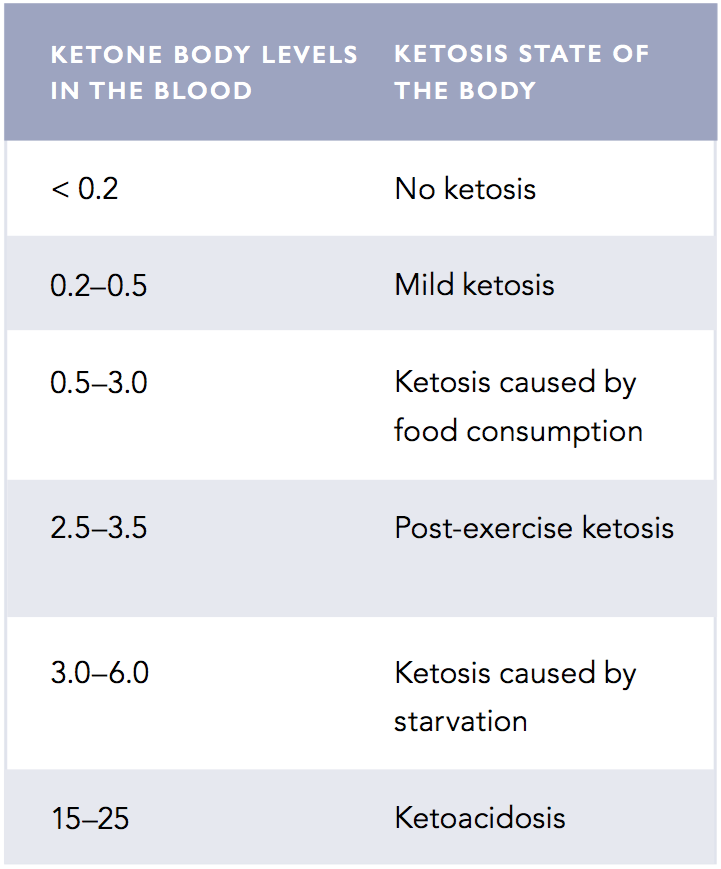
Ketosis refers to the metabolic state in which ketone bodies (not glucose) form the body's primary energy source. Ketosis occurs when carbohydrate consumption has been repeatedly restricted to less than 50 grams or the overall energy consumed is less than 800 kcal per day (very low-calorie diet or VLCD). If metabolism functions normally, the body is in a mild state of ketosis after a night's sleep (8 hours). The slow onset of ketosis after fasting is also directly proportional to abdominal obesity. The more obese the individual, the slower the onset of ketosis.
Ketosis is induced incrementally after 3–4 days of low-calorie intake, fasting or limited carbohydrate intake, once the body's glucose stores (glycogen in the liver and muscles) are depleted. The activation of ketosis is a normal body reaction to secure the energy supply of the central nervous system and the brain when no glucose is available.
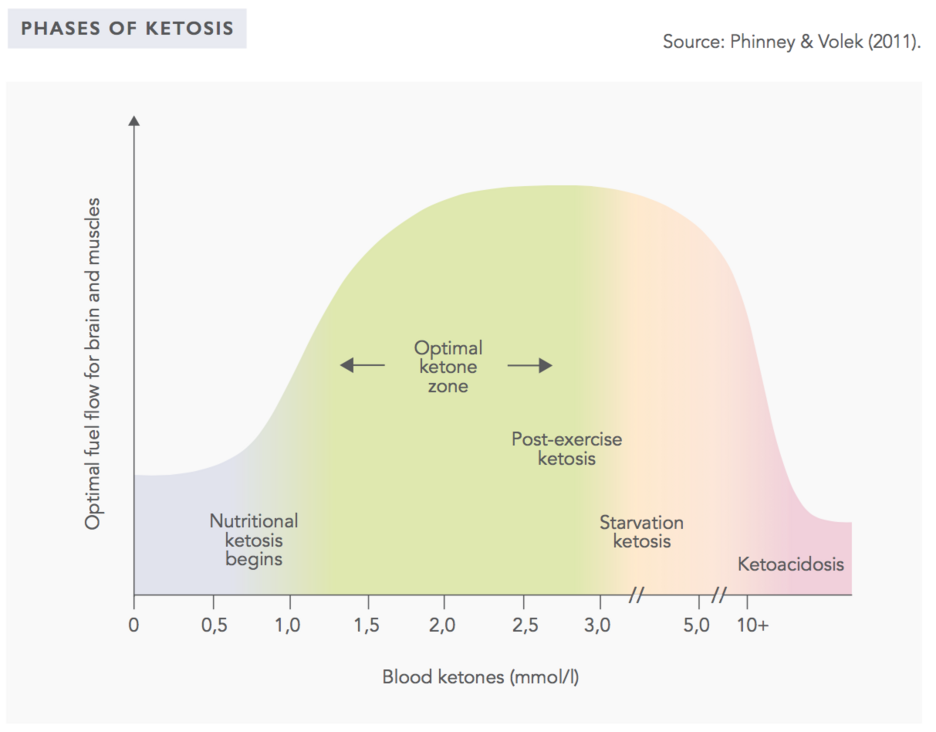
Ketone production and utilization optimize your mitochondrial function
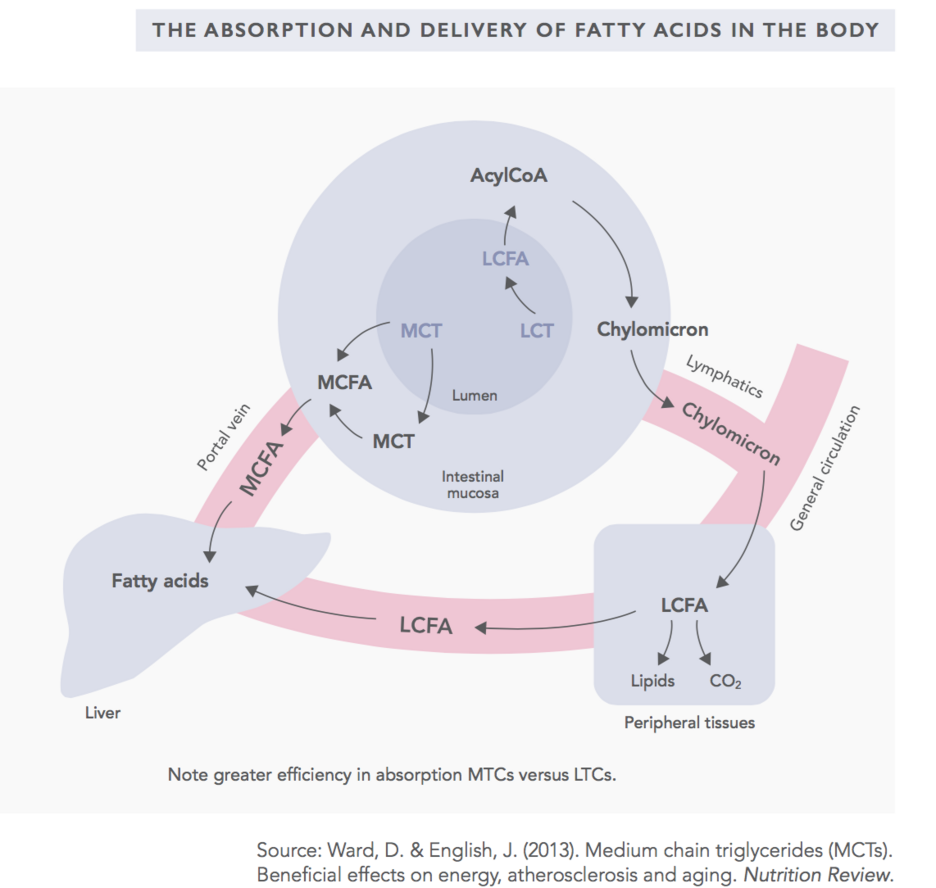
The onset of ketosis may be accelerated by consuming medium-chain fatty acids (MCT oil). Compared to long-chain fatty acids, MCT fatty acids are rapidly used for energy due to being readily absorbed (see image). MCT fatty acids also quickly move into the mitochondria and unlike long-chain fatty acids, they do not require carnitine to oxidize fats. Ketosis may also be induced after intensive and prolonged exercise, particularly if only a small amount of carbohydrates was consumed before such exercise.
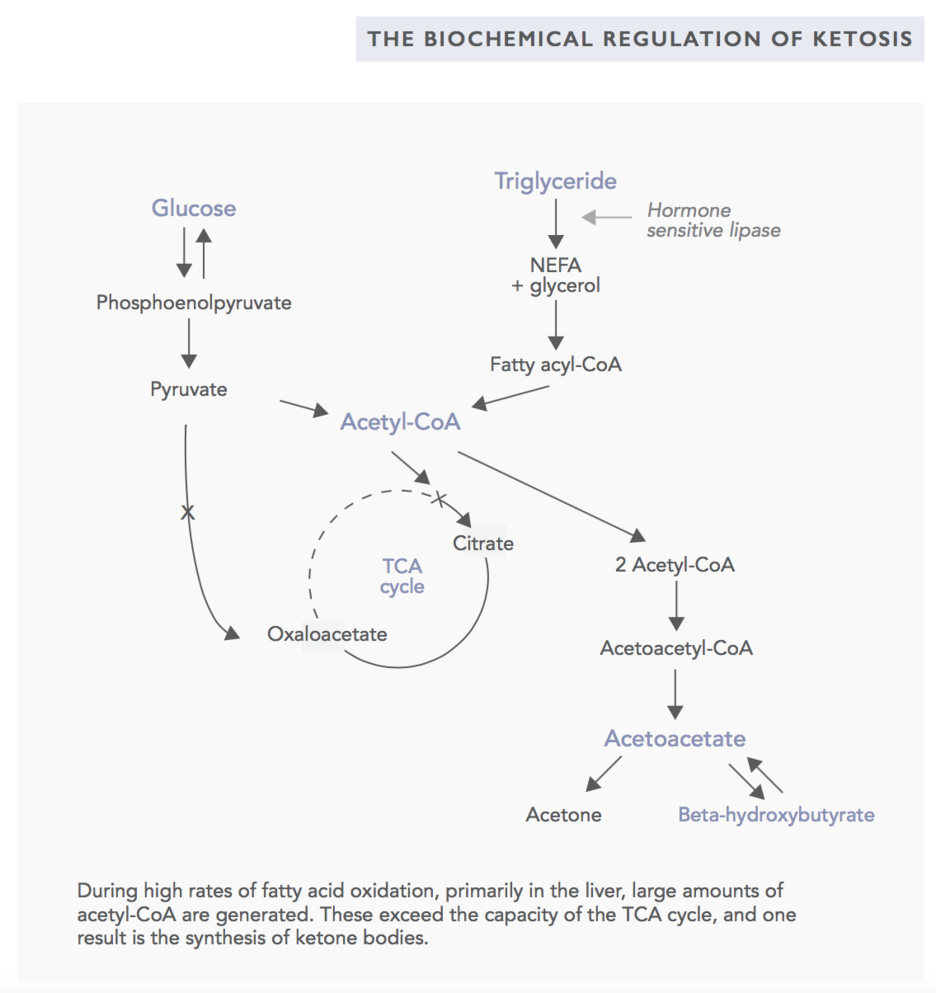
Fasting or restricting the consumption of carbohydrates lowers insulin levels in the circulation while increasing the levels of glucagon and adrenaline. This leads to the release of free fatty acids and glycerol (beta-oxidation) into the circulation. Oxidized fatty acids and glycerol form into acetyl coenzyme A, which enters the citric acid cycle in the mitochondria.
The production of ketone bodies is activated by the excessive production of acetyl coenzyme A. The process is activated when the malate has been used for gluconeogenesis and insufficient oxaloacetate is available for the normal citric acid cycle (compared to a situation in which carbohydrates are continuously available). Acetyl coenzyme A forms acetoacetate and beta-hydroxybutyrate (BHB), the primary ketone body (see image below).
The ketone bodies produced by the liver are released into the circulation and delivered into the mitochondria of the brain, internal organs, and muscles for energy production (ATP). BHB is restored to acetyl coenzyme A, utilized in the citric acid cycle.
Insufficient research exists to assess the safety of prolonged ketosis. So far the most extensive study conducted on a continuous ketogenic diet took place over 56 weeks. Health benefits were detected at least for overweight individuals. Evolutionarily, it is not typical for humans to remain in continuous ketosis for extended periods. Rather, the energy deficit is normally corrected after fasting or food acquisition.
Studies conducted on rats indicate that ketosis increases the biogenesis (volume and quantity) of mitochondria and boosts the production of ATP, particularly in the brain. This may explain why individuals in ketosis often report significant improvements in their attention span and mental agility.
Potential health benefits of ketosis:
- An effective weight-loss method, particularly in the short-term
- An effective method in the treatment of epilepsy
- May reduce the risk of cardiovascular diseases
- May reduce the risk of developing type 2 diabetes; may be helpful during treatment
- May help treat acne
- May be helpful in adjuvant therapy for cancer
- May help treat polycystic ovary syndrome
- May help treat degenerative neurological diseases (such as Alzheimer's and Parkinson's diseases)
From the perspective of a knowledge worker, ketosis is something to consider in terms of optimizing your metabolism and energy production. When teaching your body to become more keto- or fat-adapted, it creates more space and resilience in terms of energy production and hunger tolerance. When you are not relying only on glucose as an energy source, you can go hours without eating and still feeling energetic. That is why many people who incorporate ketogenesis and ketogenic diets into their lifestyle swear by it.