Habits & behavior
Hacking your habits & behavior
Habits are closely related to the decision-making process (see another module). Quite often people do not think about what they are doing or choosing, rather their actions become from old habits.
According to Charles Duhigg, habits make up over 40 % of our actions. The explanation to this is that habits are the brain's evolutionary shortcut. This means that they allow the mind to go on "autopilot" when necessary so that the body can take over.
When people do the same things repeatedly, this creates and strengthens the neuronal circuits in the brain necessary for each habit. This is understandable since we cannot make numerous conscious decisions 24/7. Therefore habits save people energy and time, which frees more resources for productivity and creativity.
But not all habits are useful. You might do things that harm your mental and physical well-being such as constant snacking, checking out your cell phone all the time or complaining constantly about various things.
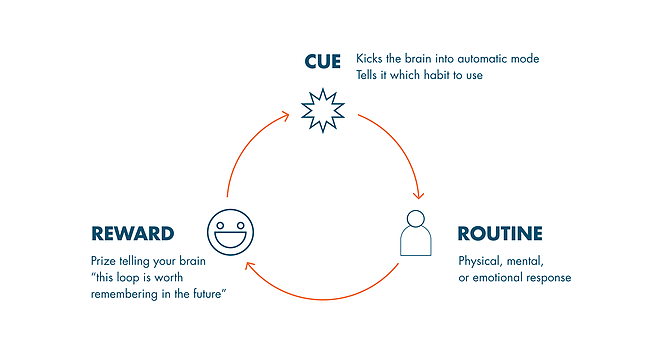
Six-step science-based method to consciously change your habits
1. Diagnose/define your habit
Figure out the basic components of habit formation:
- The cue (the feeling, time, or location that triggers your habit)
- The routine (the habit itself)
- The reward (the craving the habit satisfies)
2. Create a new environment
Moving into a new place diminishes all the environmental cues. For example, when on a vacation or doing something totally different from your normal routines, these are optimal times for breaking a habit.
For example, students who move into a new university are more likely to change their habits than students who do not move. This is completely due to not being exposed to familiar cues.
3. Focus on what you will do (not what you won't do)
When trying to stop or quit a routine or habit, many people often concentrate on stopping the routine. This usually never works. Instead, you should teach your brain new routines and habits and thus eventually override old habits.
According to psychology research, pursuing negative goals is associated with feelings of incompetence, decreased self-esteem and less satisfaction with the progress. It is simply much easier to concentrate on a positive new goal and creating a totally new habit.
4. Create a substitution you love
Because it is often very hard to stop a habit altogether creating a substitution, a new habit. Once a habit is formed it is instinctual for completing the routine once the cue is recognized and the brain craves the reward.
- Keep the old cue
- Insert a new routine
- Deliver the reward
For example, if you usually go to Facebook when having a break at work, instead of going into Facebook talk with your co-worker and create a new routine while still having the reward (social interaction & relaxation). For example, if you smoke, go outside for a short walk when having a break instead of lighting a cigarette. Both acts create a sense of break and catching up some "fresh air".
- Once you find your new routine, try to do it each time the cue and craving hit you.
5. Share your progress with friends (and/or family)
You are probably familiar with the saying "Sharing is caring". According to a study by the Association of Science-Technology Centers, if you tell a friend you’re working towards a goal, you have a 65 % chance of completing it. But, if you set up a meeting or a coffee date with a friend to discuss your goal, your odds of completing it will rise to 95 %.
This is because once making a public commitment to others people tend to feel obligated to follow through with it. Sharing the goal/new habit also leads to positive reinforcement.
6. Be kind to yourself
The fact is that no matter how committed you are, there is a strong possibility of breaking the new habit and going back to the old one. This happens especially when stressed out or in a hurry. The best thing to do then is to be gentle and kind to yourself: tomorrow is a new day.
According to research "messing up" now and then won't materially affect the habit formation in your brain. Just go back to your new routine/habit and continue.