Folate
FOLATE (VITAMIN B9)
Folate (vitamin B9) is an essential water-soluble vitamin available from food. Folate is a generic term that refers to natural forms of folate present in food (more than 100 different types) and the synthetic folic acid form, used in dietary supplements and as an ingredient in some fortified foods. Using folic acid to fortify foods was thought to reduce folate deficiency on a population level; however, analyses suggest that it has had little positive effect. Folic acid is not biologically active until it is converted into folate in the body.
Folate is important in the metabolism of nucleic acid precursors and several amino acids and in various methylation reactions, in which it acts as a coenzyme. DNA methylation is crucial in regulating the occurrence of various genes and in the cellular differentiation process. Disruptions in DNA methylation have been linked to the development of cancer. This is usually associated with dietary folate deficiency. Folate deficiency has also been linked to disruptions in the homocysteine metabolism, which in turn may be a predisposing factor for cardiovascular diseases and dementia (see section Vitamin B6, above). With advanced age, low folate levels have been associated with cognitive disorders, even the development of dementia.
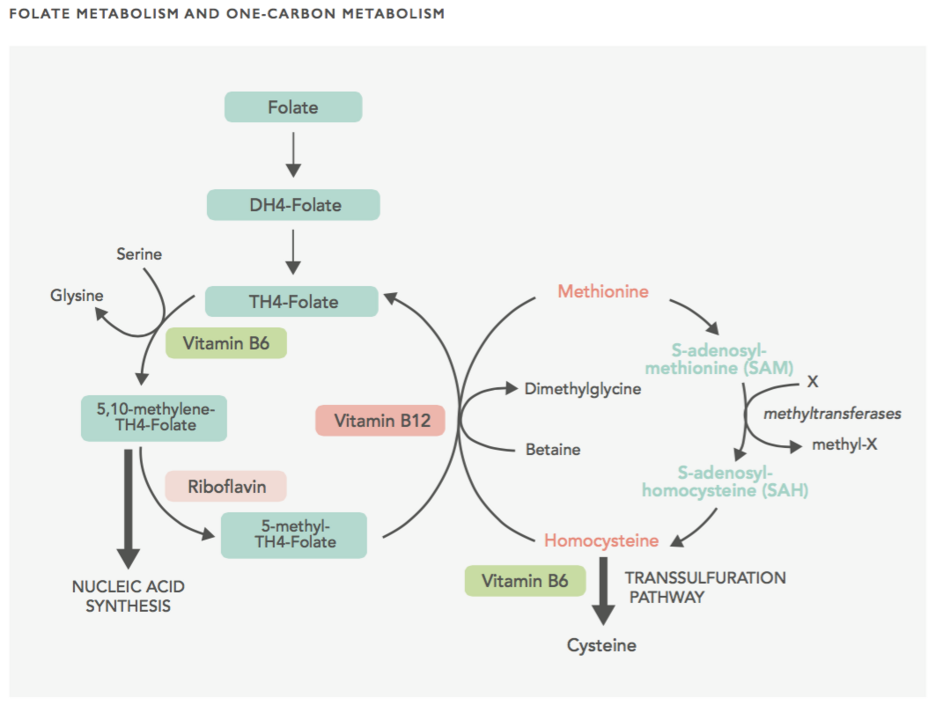
Folate also plays an important role in normal growth and development (particularly of the brain), normal digestive tract function and maintenance, as well as the production of blood cells. Sufficient folate intake is necessary for pregnant women to ensure the normal development of the fetus (prevents spina bifida). A dietary folic acid supplement (preferably active folate) is recommended for up to 3 months before a planned pregnancy.
Severe folate deficiency may lead to megaloblastic (or macrocytic) anemia. However, such development takes at least 4 months, the lifespan of red blood cells in the blood. Symptoms of megaloblastic anemia may include fatigue, weakness, breathlessness, glossitis, and intestinal symptoms. Megaloblastic anemia may also be caused by vitamin B12 deficiency, which has similar symptoms. Latent folate deficiency is relatively common. Symptoms may not be present, but there can be an increased risk of developing various chronic illnesses (cardiovascular diseases, dementia, and osteoporosis). The homocysteine level in the blood usually goes up as well.
There may be an increased need for folate from food in the event of an MTHFR (methylenetetrahydrofolate reductase) gene mutation or C677C>T polymorphism (cytosine replaced by thymine). According to estimates, 30–53 % of the population carries one allele of this gene mutation (heterozygote) and 3–32 % may have two such alleles (homozygote). In the individuals who are heterozygotes, the activity of the MTHFR gene is reduced by approximately 30 %, whereas with homozygotes the reduction is 60 %. This means that such individuals have a significantly higher need for folate from food, and the activation of synthetic folic acid into folate is notably impaired.
Due to these quite common mutations, acquiring a bioactive form of folate from food or as a dietary supplement is recommended. Therefore, folic acid as a dietary supplement does not benefit many people. It is also likely that the recommended daily folate intake from food is not sufficient for individuals with this mutation. This can be tested with a simple DNA test.
Predisposing factors for folate deficiency:
- Unvaried and nutrient-poor diet (e.g. very few or no fruits and vegetables)
- Long-term alcohol use (usually alcoholism)
- Smoking (smokers have approximately 15 % lower folate levels compared to non-smokers)
- Increased folate secretion due to various illnesses (e.g. liver or kidney diseases)
- Significant tissue damage due to trauma
- Inflammatory intestinal diseases and celiac disease, both of which disrupt folate absorption
- Increased homocysteine levels in the body, using up more folate in sulfur metabolism than is acquired
- Institutional care and reduced appetite
- Many types of medicine, such as contraceptives, epilepsy drugs, phenytoin, cholestyramine, and large doses of NSAIDs.
Proven health benefits of folate:
- May prevent cardiovascular diseases such as coronary artery disease, coronary thrombosis or stroke (strongly linked to the maintenance of a normal/low level of homocysteine)
- May prevent various types of cancer and help repair damaged DNA
- May prevent colorectal cancer in genetically predisposed individuals
- May prevent dementia and Alzheimer’s disease or slow down their development