About Cortisol
Glucocorticoids are corticosteroids produced by the outermost layer of the adrenal glands. Their physiological effect is transmitted through numerous glucocorticoid receptors (GR) in the cells. They affect metabolism by promoting the breakdown of fat (lipolysis), boosting the release of amino acids and glucose into the blood and inhibiting the transmission of glucose into muscle and fat cells. Glucocorticoids also affect the immune, bones, cardiovascular and circulatory systems, reproduction and cognitive functions. For example, glucocorticoids boost cardiac muscle contraction and reduce inflammation and the severity of allergic reactions.
The primary glucocorticoid in the human body is cortisol, approximately 15–30 mg of which is secreted daily in the adrenal cortex's middle layer or zone (zona fasciculata). A stress reaction in the body temporarily spikes cortisol production. Afterward, the cortisol levels usually return to normal. Chronic stress may cause permanently elevated cortisol production. Like insulin resistance, this may cause glucocorticoid receptor resistance (GCR). GCR is a predisposing factor for common colds and probably many other inflammatory illnesses.
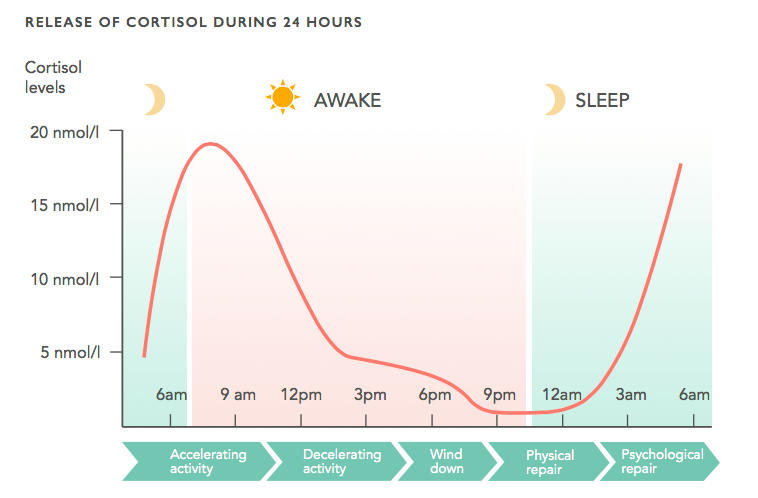
The adrenal gland secretes cortisol in pulses, following the circadian (daily) and ultradian (hourly) rhythms. For instance, the release of cortisol peaks in the morning, making it easier to wake up and significantly boosting mental energy levels. Cortisol production slowly decreases over the day and is usually at its lowest around midnight. Studies have shown it to be one of the most reliable followers of the circadian rhythm in the body. Cortisol levels should be tested in the morning.
The pulsatile nature of cortisol secretion is crucial for normal physiological responses to occur in the body. Animal tests have shown that insufficient pulsatile cortisol secretion impaired hippocampus memory functions and often inhibited acute stress reactions. The disruption of the circadian rhythm is associated with exhaustion, sleep disorders, metabolic disorders and a generally reduced quality of life.
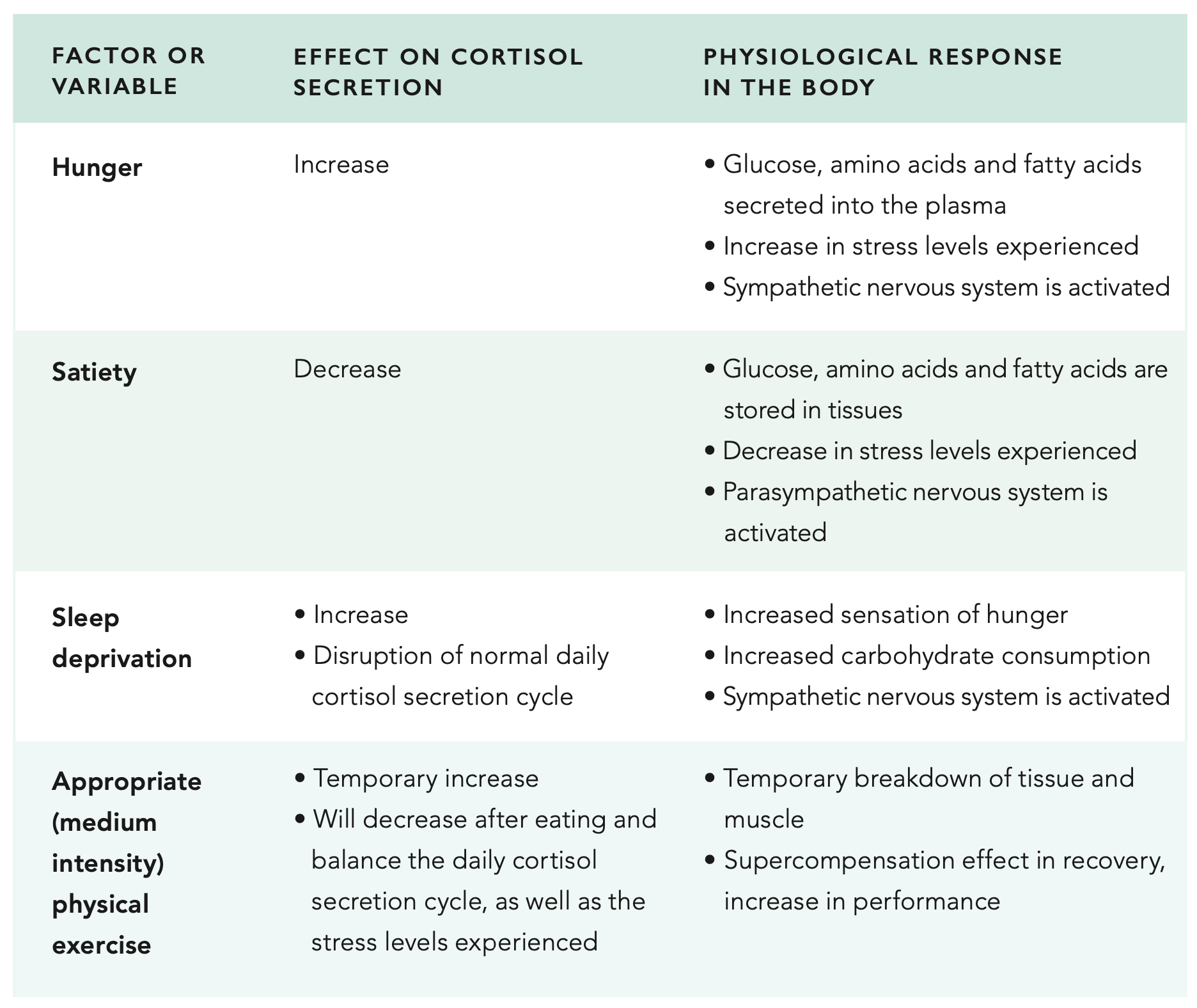
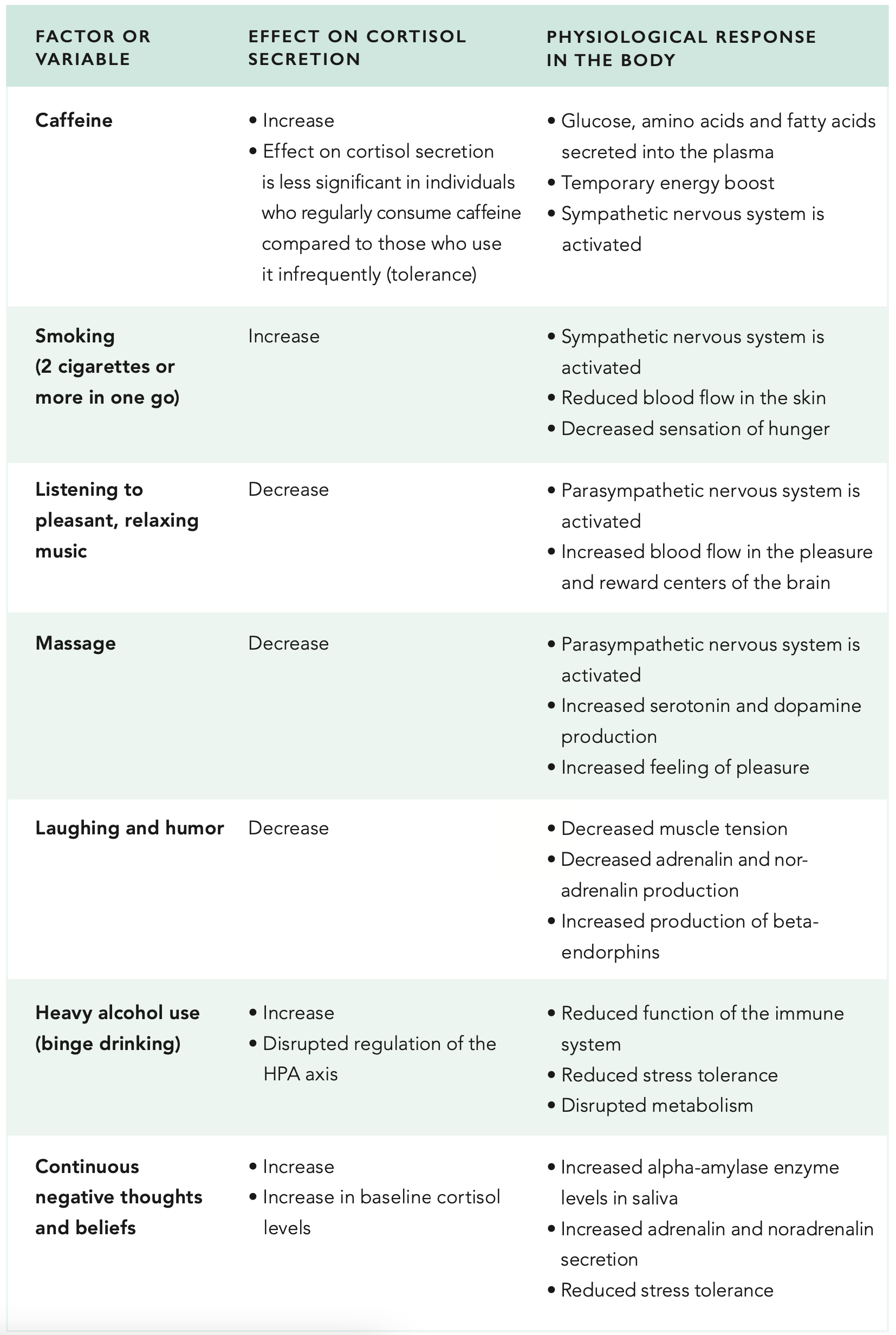
Factors affecting cortisol secretion
Biostarks reference ranges for cortisol
- Cortisol (COR-S): 140-620 nmol/L
Scientific references:
- Oakley, R. H., & Cidlowski, J. A. (2013). The biology of the glucocorticoid receptor: new signaling mechanisms in health and disease. Journal of Allergy and Clinical Immunology, 132(5), 1033-1044.
- Sapolsky, R. M., Romero, L. M., & Munck, A. U. (2000). How do glucocorticoids influence stress responses? Integrating permissive, suppressive, stimulatory, and preparative actions. Endocrine reviews, 21(1), 55-89.
- Chan, S., & Debono, M. (2010). Replication of cortisol circadian rhythm: new advances in hydrocortisone replacement therapy. Therapeutic advances in endocrinology and metabolism, 1(3), 129-138.
- Norman, M., & Hearing, S. D. (2002). Glucocorticoid resistance—what is known?. Current opinion in pharmacology, 2(6), 723-729.
- Cohen, S., Janicki-Deverts, D., Doyle, W. J., Miller, G. E., Frank, E., Rabin, B. S., & Turner, R. B. (2012). Chronic stress, glucocorticoid receptor resistance, inflammation, and disease risk. Proceedings of the National Academy of Sciences, 109(16), 5995-5999.
- Weitzman, E. D., Fukushima, D., Nogeire, C., Roffwarg, H., Gallagher, T. F., & Hellman, L. (1971). Twenty-four hour pattern of the episodic secretion of cortisol in normal subjects. The Journal of Clinical Endocrinology & Metabolism, 33(1), 14-22.
- Selmaoui, B., & Touitou, Y. (2003). Reproducibility of the circadian rhythms of serum cortisol and melatonin in healthy subjects: a study of three different 24-h cycles over six weeks. Life sciences, 73(26), 3339-3349.
- Lightman, S. L., Wiles, C. C., Atkinson, H. C., Henley, D. E., Russell, G. M., Leendertz, J. A., ... & Conway-Campbell, B. L. (2008). The significance of glucocorticoid pulsatility. European journal of pharmacology, 583(2-3), 255-262.
- Debono, M., Ghobadi, C., Rostami-Hodjegan, A., Huatan, H., Campbell, M. J., Newell-Price, J., ... & Ross, R. J. (2009). Modified-release hydrocortisone to provide circadian cortisol profiles. The Journal of Clinical Endocrinology & Metabolism, 94(5), 1548-1554.