Cholesterol
CHOLESTEROL (TOTAL CHOLESTEROL)
Cholesterol is structurally steroid alcohol (sterol). The body can produce cholesterol independently in all tissues; however, it is predominantly produced in the liver. Cholesterol is also found naturally in animal-based foods. Cholesterol forms a vital part of the cellular membrane where it maintains structural balance and elasticity (approximately 30% of the entire cellular membrane). Unlike plants, animal cells can function without cell walls, thanks to cholesterol. Cholesterol is necessary for the biosynthesis of steroid hormones, bile acid production, and vitamin D synthesis.
An individual synthesizes approximately 1000 mg of cholesterol per day. There is approximately 35 g of cholesterol stored in the body. Adult Finnish men receive on average 296 mg of cholesterol per day from food; for adult women, it is 210 mg per day. The previously recommended cholesterol intake has recently been removed from the nutritional guidelines. This is due to significant genetic variation in cholesterol absorption and thus the resulting changes in blood cholesterol levels.
The most cholesterol-rich food is the egg. Many people continue to avoid frequent egg consumption, although the link between increased risk of coronary artery disease and cardiac mortality has been refuted in all recent studies and meta-analyses. The studies have not found a strong correlation between egg consumption and increased cholesterol levels.
Elevated cholesterol levels caused by inflammation and endothelial damage to the inner wall of blood vessels may lead to a build-up of low-density lipoprotein (LDL) particles in the blood vessels (glycoprotein webs) and impair the blood flow to the heart, brain, and other organs. Studies have shown that the condition behind atherosclerosis (plaque build-up in the arteries) is indeed subendothelial lipoprotein retention. In plain English, this refers to lipoproteins building up at sites of inflammation and thickening the blood vessel walls, thereby reducing the lumen (space) inside the blood vessel. The anti-inflammatory diet (see above) can help prevent this change. On the other hand, theories have been proposed suggesting that LDL particles in and of themselves are harmful “foreign objects” that, upon sticking to the artery glycoprotein web, cause inflammation. The situation becomes a real problem when the inflammatory reaction becomes prolonged and chronic – building up atherosclerotic plaque-forming cholesterol crystals.
Endothelial damage and inflammation can be affected by several factors such as chronic infections, the microbial balance of the intestines and/or abnormal intestinal permeability (causes endotoxemia), metabolic disorders, environmental toxins (especially heavy metals), hypothyroidism, and genetic factors. Elevated cholesterol is not a problem in and of itself – however, physiological problems occur more frequently when this is combined with elevated silent inflammation, insulin resistance, and endothelial damage, as well as a high number of LDL particles (NB! Not LDL cholesterol). A link has also been found between this and metabolic syndrome.
Low total cholesterol may cause vitamin D deficiency, steroid hormone production problems, depression and an increased risk of premature death from various causes.
Factors that increase total cholesterol include smoking, excessive and ongoing alcohol use, untreated hypothyroidism, diabetes, obesity, menopause, low levels of physical activity, and genetic factors. High-fat diets (such as ketogenic or low-carb diets) may also temporarily increase total cholesterol levels – however, the effect is usually temporary. Hypothyroidism should always be ruled out if the total cholesterol levels are significantly elevated.
Thyroid hormones stimulate the production of LDL receptors in the liver. Sex hormone-binding globulin (SHBG, see Chapter 4) binds LDL cholesterol, thus reducing LDL cholesterol levels in the blood. With hypothyroidism, the amount of LDL receptors produced is insufficient, leaving more LDL cholesterol in the blood. This raises LDL cholesterol levels as well as total cholesterol. The activity of the LDL receptor is also influenced by insulin, the effect of which is carried by PCSK9. PCSK9 binds to apolipoprotein B100 on the surface of LDL particles, preventing them from binding to LDL receptors, thus blocking their entry into the cells. The better and more stable the regulation of insulin secretion and sensitivity, the better the functionality of cholesterol metabolism through PCSK9 inhibition.
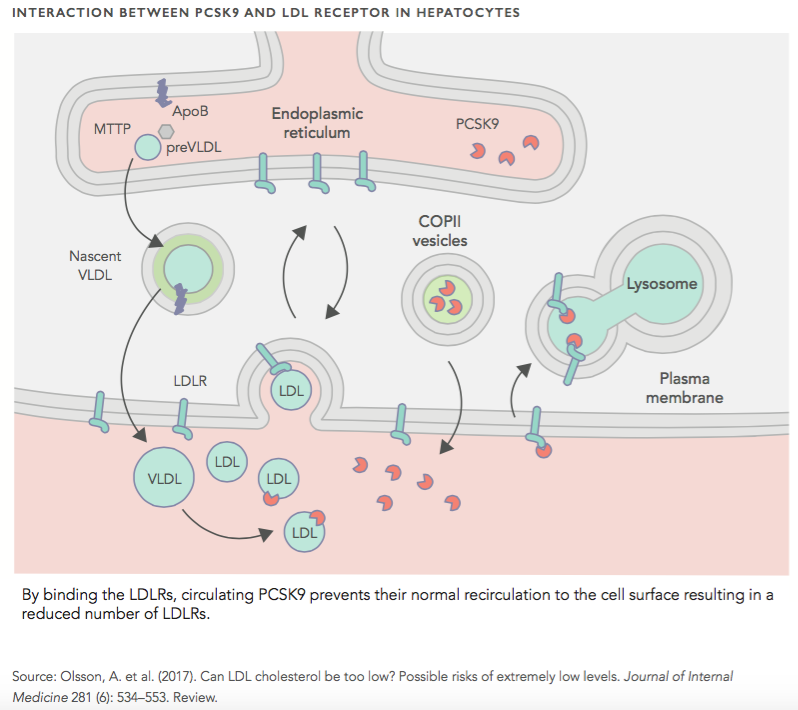
Another factor regulating the occurrence of PCSK9 is inflammation – the more severe the inflammation, the higher the level of PCSK9, significantly increasing the cholesterol level in the blood. Conversely, a lower level of PCSK9 is associated with reduced inflammation. High PCSK9 levels are also linked to the build-up of atherosclerotic plaque (associated with coronary artery disease).In summary, controlling insulin secretion is key, such as consuming a Mediterranean, low-carb, or ketogenic diet and practicing intermittent fasting.
”Take home message”: Reduce the silent inflammation in the body, improve insulin sensitivity, and optimize the secretion of thyroid hormones and their levels in the blood.
In 2004, the Nordic Reference Interval Project (NORIP) determined the reference range for total cholesterol for healthy adults:
The reference range for adults according to the NORIP study:
- Aged 18–29: 2.9–6.1 mmol/L
- Aged 30–49: 3.3–6.9 mmol/L
- Aged 50+: 3.9–7.8 mmol/L
The total cholesterol level alone does not tell us much from the perspective of cardiovascular diseases (except for the aforementioned familial hypercholesterolemia). The reference range is also quite wide, indicating significant individual variation. The comprehensive HUNT 2 study using a Norwegian population for analysis found that the overall mortality is at its lowest when total cholesterol falls between 5–7 nmol/L.
A study conducted on elderly people admitted into hospital care found that the highest level of mortality involved individuals with the lowest total cholesterol levels (less than 4.14 mmol/L). An inversely proportional link was found between mortality and cholesterol levels – the lower the levels, the higher the mortality. A Swedish study published in 1997 indicates that a low total cholesterol level (less than 4.7 nmol/L) is linked to a higher frequency of depression in middle-aged women.
NB! This course does not take a stance on the use of cholesterol medication. The use or disuse of medication should be discussed with your primary physician.