Balance, mobility & coordination
Incorporate what you learned earlier during the course on optimal ergonomics. In this module, we perform simple movements and drills that improve balance, mobility, and coordination.
Implement balance and mobility training into your workday
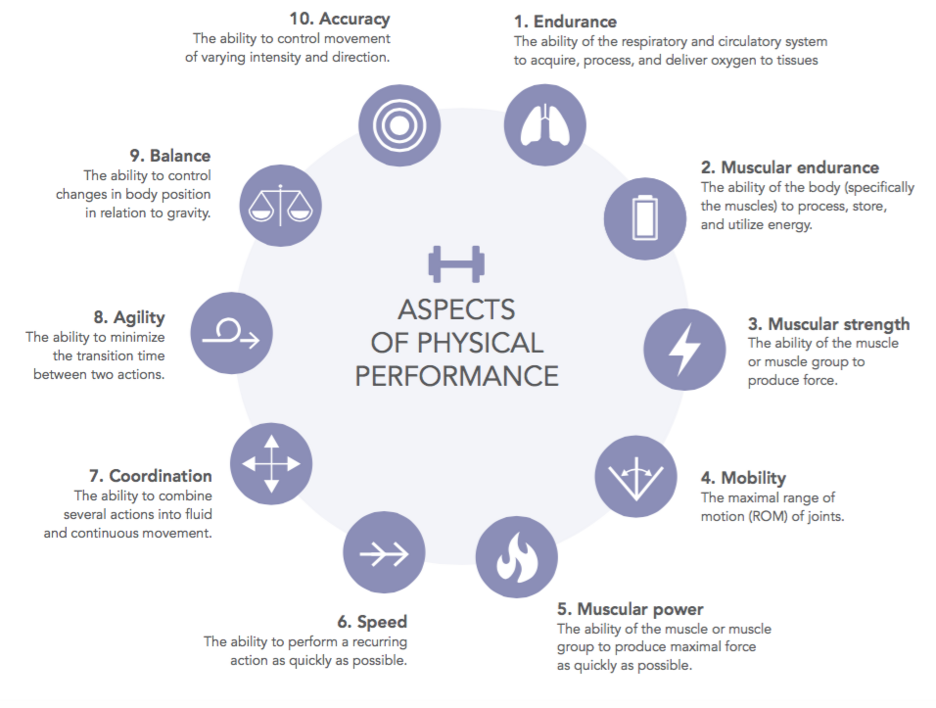
Mobility refers to the ability to move the limbs and body through various ranges of motion without pain. A reduced range of motion of a joint indicates impaired mobility. Mobility (flexibility) is a basic physical characteristic and, in practice, the basis of general physical ability. Children are a great example of normal mobility and flexibility. The modern-life tendency to sit down to work that starts at school reduces natural mobility.
Optimal mobility is crucial for maintaining good posture and preventing incorrect positions and injuries during exercise. By improving mobility, it is possible to improve the effectiveness and economy of various exercises significantly. For the elderly, mobility has an important role in preventing slipping and falling and accidents.
Balance, on the other hand, is the ability to control changes in body position in relation to gravity. For example, standing on one leg requires balance and proprioception to keep the body upright. By incorporating simple yet effective movements into your workday, you can develop your posture, balance, and even coordination without putting much effort into it.
What about stretching?
Stretching can be divided into three categories based on the desired duration: short dynamic, medium-length, and long static stretching. Medium-length stretching (15–30 seconds) has been found to increase the range of motion of joints significantly.
The recommendation is to do dynamic, short stretches and special techniques such as MET (muscle energy technique) and PNF (proprioceptive neuromuscular facilitation stretching).
Try these movements:
- forward lunge with upper body rotation
- leg swings to the front, back, and sides
- knee-to-chest walking stretch
- upper arm swings to the sides and front
- crab walk
- bear walk
- standing on one leg
- jumping on one leg
- standing on your toes (with both legs and/or one leg)
SIMPLE KETTLEBELL MOVEMENTS
Having a kettlebell close to your work desk is a great investment; you can do multiple simple exercises during a short break from work. Doing kettlebell movements throughout the day can accumulate as much work as a separate kettlebell session outside the workplace.
Try these movements:
- Kettlebell swing (easy to perform, very effective on the whole body; see picture below)
- Goblet squat (holding the kettlebell in front of the chest; great for hip body mobility when holding in the squat position)
- Shoulder press using a kettlebell
- Single-leg deadlift using kettlebells
- Slingshot & halo (good for shoulder mobility)
SIMPLE BODYWEIGHT MOVEMENTS
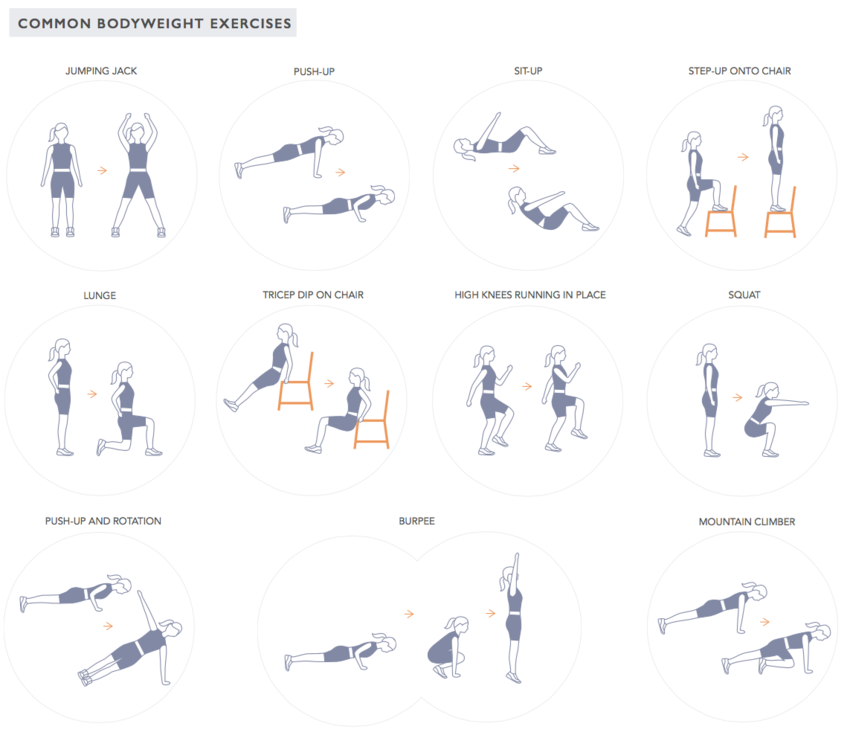
Bodyweight movements can be done anywhere. All you need is your body, some time and a motivation to move. Use bodyweight movements throughout the workday - especially when there is no time for a separate gym training session. Bodyweight movements are great for micro-breaks (see section "optimized breaks") which last a maximum of one minute.
Try these movements:
- jumping jack (great for also elevating heart rate)
- push-up
- lunge
- squat
- burpee (great for also elevating heart rate and using the whole body)
- sit-up
- pull-up (when having a pull-up bar or similar nearby)