Adaptogenic herbs
Adaptogenic herbs in stress management
Adaptogens or adaptogenic compounds (derived from the Russian word adaptatsija) refer to a term defined for the first time in 1947 by Soviet physician and researcher Nikolai Lazarev. These terms are used for herbal plants, drugs, or other compounds that increase the ability to adapt to physical, biological, and chemical stress factors while promoting the body's normal balanced function.
By the latest definition, an adaptogen is:
...a substance that enhances the body's ability to adapt to internal and external stress by enhancing the function of the immune system, nervous system, and endocrine glands.
Adaptogens improve resistance to stress, disease, and stressful environmental factors, and normalize and enhance metabolic activity. They are some of the biological response regulators that support body balance or homeostasis. The effects of Adaptogens have been studied in the Soviet Union and Russia since the 1950s. In the West, research began to be carried out more widely in the 21st century. The number of published studies has grown exponentially over the past two decades.
Some of the physiological mechanisms of adaptogens
Adaptogen is generally unofficial and somewhat contradictory since it does not sit on pharmaceutical receptor theory and consensus. Adaptogens are allostatic in their mode of action - they contribute to achieving an allostasis of the body's natural stress management. Allostasis refers to the homeostasis of stress, i.e., stress regulation by adaptive stress management systems in the body.
At the physiological level, adaptogens support the body's homeostasis and balance the function of the nervous system and the endocrine gland through the HPA axis. Effects include stress-related neurotransmitters such as cortisol, neuropeptide Y and nitric oxide (NO) and cellular G protein-coupled receptors (such as cAMP, which inter alia mediates the effects of adrenaline on cells), stress-activated protein kinase JNK (MAPK-9), thermal shock factor 1 (HSF-1), stress proteins (e.g., Hsp72) and FoxO / DAF-16 transcription factor.
Most researched adaptogens are:
- Panax ginseng
- American ginseng
- Ashwagandha
- Cordyceps
- Gynostemma
- Licorice
- Maca
- Reishi
- Rhodiola
- Siberian ginseng
- Schisandra
- Tulsi
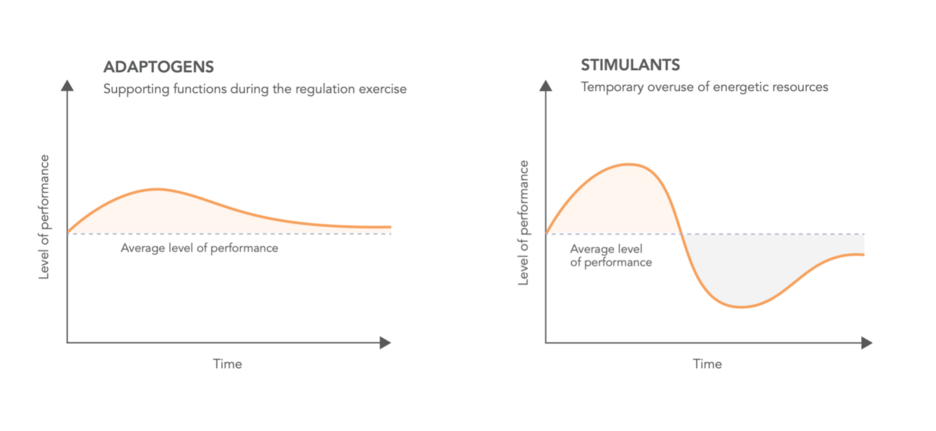
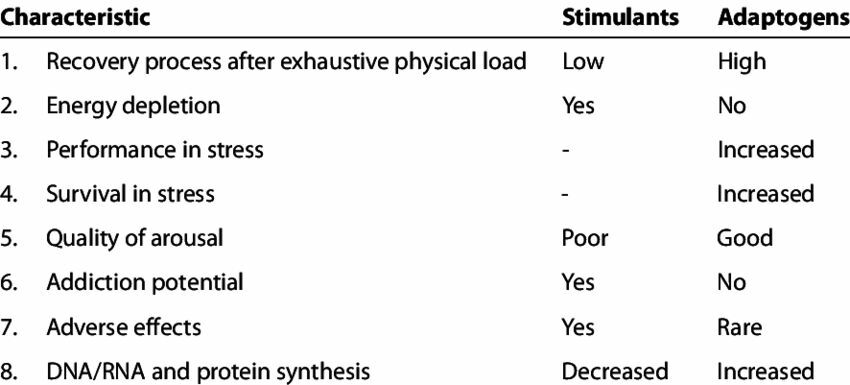
The most important adaptogenic herbs for stress management
Rhodiola rosea (roseroot)Rhodiola rosea is one of the world's oldest herbaceous plants. It belongs to the stonecrop family and grows especially in the northern hemisphere. The roseroot has a long history of use in challenging conditions such as the Tibetan mountains, the Siberian desert, and the cold Scandinavia. The Vikings have been told to use roseroot to improve physical strength and endurance.
The anti-stress properties of rhodiola are based, inter alia, on rosavin and salidroside. However, almost 140 active ingredients have been isolated from the roseroot. Tissue and cell culture studies have shown that they have multiple effects. These include neuroprotective and cardioprotective effects, reduction of fatigue and exhaustion, relief of anxiety and depression, as well as stimulating effects in cognitive function and central nervous system
Roseroot's salidroside can protect nerve cells from damage and, in particular, so-called excitotoxicity - a condition in which nerve cells fire too much, for example, by the action of excessive glutamate. According to research conducted on roundworms and flies, roseroot will at least extend the life span of these organisms. The most active ingredients of roseroot are p-tyrosol and its glycoside salidroside. In addition, rosavins are expected to have physiological effects. In human studies, SHR-5 extract (standardized 4: 1 alcohol extract from roseroot) has been found to have beneficial effects, for example in stress management while studying, stress management and fatigue in knowledge work, and cognitive performance during the night shift.
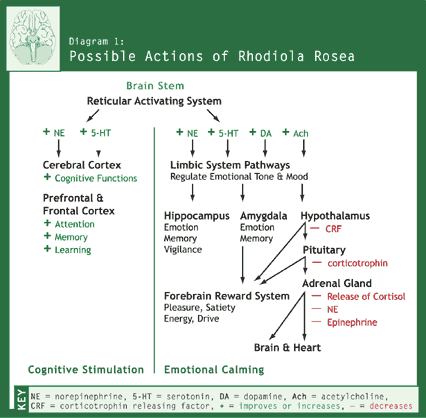
Rhodiola has numerous physiological mechanisms of action in the body. These are described in more detail in the diagram below. The main mechanisms of action are related to the regulation of brain neurotransmitter balance, the energy production of muscle cells, the secretion of stress hormones and the prevention of oxidative stress. Studies in humans have shown that roseroot is safe for use and no clinically relevant side effects have been reported.
Optimal dosage:
- 288–680 mg per day
Schisandra chinensis
Schisandra chinensis is one of the most prestigious herbs in Chinese medicine. Schisandra is sweet, sour, bitter, salty and umami, which comes from its Chinese name, Wu Wei Zi, a five-flavored berry. Schisandra is highly valued in China and is seen as a spiritual growth herb. The history of using Schisandra extends well before the beginning of the countdown (about 2600 BC). Schisandra was categorized as a "superior" mythical Chinese emperor Huangdi (2698-2598 BC) in the classic book Huangdi Neijing.
Schisandra has been used in, for example, Russia, China and other East Asian countries for a wide range of ailments such as asthma, cough and other respiratory problems, diarrhea, insomnia, impotence and kidney problems. Foresters and athletes have used Schisandra to improve durability and prevent combat fatigue. Traditionally, Schisandra has also been used as a beautifying ingredient, both externally and internally.
The main biologically active ingredients of Schisandra include lignans such as schisandrins A, B and C. Bioactive lignans have been identified in about 30 different plants. Schisandra also contains a variety of triterpenes, but their effect is not well known. In Russia, Schisandra has been used in the form of an extract of alcohol from dried berries, mainly in China as a water extract or powder. In traditional Chinese medicine, an alcoholic extract known as Wurenchum.
The use of Schisandra as an adaptogen came to Western consciousness in the 1960s with studies published in the Soviet Union. Animal studies found that Schisandra increases physical performance and protects against stress reactions such as heat stroke, skin burning, frostbite, immobilization, and radiation. Cell and tissue studies show that Schisandra has strong antioxidant and cell-protecting effects. Based on clinical trials in Russia and the Soviet Union, Schisandra increases endurance, accuracy, and mental performance and can lower cortisol levels. In athletes, Schisandra has been found to reduce the post-exercise increase in nitric oxide and cortisol in the saliva.
Based on rat experiments, Schisandra has been found to have an anxiety-reducing effect. It has also been found to protect mitochondria and increase neuron ATP production. In animal studies and traditional Chinese medicine, it has been found that Schisandra protects the liver against damage.
Optimal dosage:
- alcohol extract 20–30 drops per day (1:6 extract)
- water extract 1–3 g per day
- glycerol extract 1–2 ml 1–3 times per day (1000–2000 mg doses)
Ashwagandha (Withania Somnifera)
Ashwagandha has been used for thousands of years in Ayurvedic medicine, especially in Tibet. Ashwagandha means "horse odor", suggesting a fresh root horseshoe-like smell. The story tells us that using ashwagandha can achieve the horse's strength and virility.
Ashwagandha is classified in Ayurvedic as a general strengthening and rejuvenating so-called Rasayana herb. Ashwagandha is also called
'Indian Ginseng' is explained by the abundant cultivation of the root in India. Ashwagandha is used as a dried herb (roots and leaves), as a liquid extract and as a standardized extract.
Ashwagandha's most important biochemically active ingredients are the so-called steroid lactones such as withaferin A, withanon, withanoside IV and withanolide A. Two standardized formulations are available from Ashwandanda: the wide-ranging KSM-66 and the more sedative Sensoril Ashwagandha.
Numerous clinically significant studies based on human experiments have been published in Ashwagandha. Favorable health effects have been observed, inter alia, in the prevention of anxiety, in lowering stress levels and in stress-related depression. In addition, Ashwagandha has been shown to significantly decrease cortisol levels. Based on mouse studies, it can prevent stress-induced impairment of the immune system. Ashwagandha can significantly improve physical performance (strength, oxygen uptake, and recovery) and increase slightly testosterone levels in men.
Ashwagandha is generally classified as safe and no side effects have been reported. Intestinal irritation may occur at higher single doses. The use of Ashwagandha is not recommended when using MAO inhibitors.
Optimal dosage:
- 2000mg x 3 per day (lower doses like 300–500 mg also work in stress management)
Reishi (Ganoderma lucidum)
Reishi has been used for millennia especially in Chinese medicine as a reliever for coughing and asthma, as a sedative for the mind, and as a facilitator of dizziness, insomnia, and lifestyle. According to the legend, China's first emperor sent explorers to look for an elixir of life from the Eastern islands (the current Japanese region). The explorers, who returned years later, brought Reishi with them.
Reishi has been said to maintain life, increase life expectancy, promote health and balance bodily functions without side effects. Reishi is thought to increase the so-called Shen, a channel of spirituality in Chinese medicine - the connection between heart and mind.
There are six different types of reishi in nature that are thought to have different effects. Red Reishi, or Ganoderma lucidum, is the most studied and the strongest in its medical effects. Reishi is also known as Lingzhi, "10,000 Year Fungus", "Mushroom of Immortality" and "Life Elixir." The red Reishi is extremely beautiful, but it rarely appears in nature. As a result, Reishi is now cultivated using organic rice of dark rice or woodcut.
Reishi is generally considered the king of adaptogenic herbs. The active ingredients in Reishi are diverse: sterols (ergosterol, coumarin, mannitol), polysaccharides (ganoderans B and C, beta 1,3-D-glucopyran, betaglucans), more than 100 known triterpenoids (ganoderamic acids), germanium as well as several vitamins and amino acids are known as active ingredients of Reishi. In particular, triterpenoids are extracted with alcohol. Correspondingly, polysaccharides extract well in water. Nowadays, so-called double extracts (water and alcohol) are available containing most of the Reishi's bioactive substances.
Reishi's ingredients affect cells that regulate the immune system. Reishi can stimulate or inhibit the immune system - it balances and teaches the cells to adapt to environmental responses. Because of these properties, Reishi acts as a so-called immunomodulator.
Based on rat studies, Reishi helps reduce excessive stress by relaxing, easing sleep, and increasing sleep levels. In addition, it has been shown that it has protective effects against various toxins. Reishi has also been found to relieve fatigue in the so-called neurasthenia significantly.
Reishi is generally not recommended for people suffering from autoimmune diseases because of its potential stimulating effects on the immune system. Reishi may also prevent using medicines that affect the immune system, such as those used to treat cancer. If you are considering using Reishi in these conditions, discussing this with your doctor first is advisable.
Optimal dosage:
- Alcohol extract 6 mg
- Water extract 1800 mg 3 times per day