Activity & movement tracking
Measuring sitting, standing, and overall physical activity
The market has been flooded with various activity trackers and measuring devices in the past decade. Before activity trackers, pedometers were used to count steps. Three-axis accelerometers have been used for research purposes for some time now.
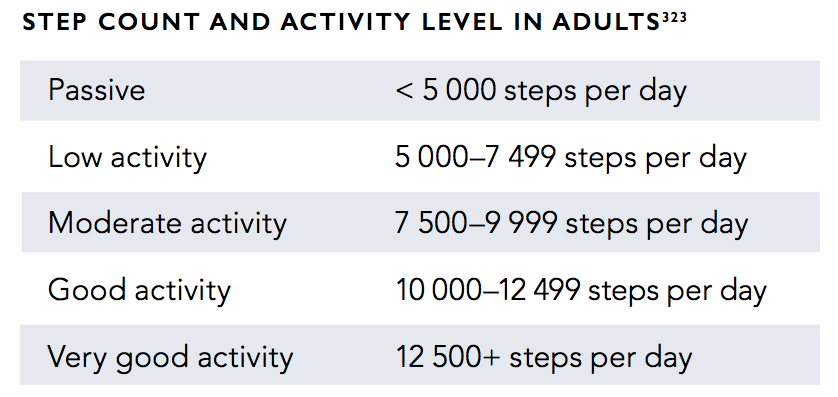
These days many smartphones feature a step counter. Some devices have the capability to count the stairs and floors climbed. Compared to actual pedometers, the problem with accelerometers is often how the steps are registered – the figures are optimistic and the recommended 10,000 step daily result is too easily achieved. External activity-tracking accessories such as bracelets, jewelry, and watches have been designed with popular phone models. Some activity trackers have a continuous heart rate monitoring feature.
A comprehensive systematic analysis published in 2007 found that using step counters was associated with a significantly higher physical activity, lower body mass index, and blood pressure. According to the study, the use of step counters increased the level of physical activity by nearly 30 %. Conversely, a review published in 2014 found that one-third of those who purchased an activity tracker stopped using it within six months. According to a statistic published in 2017, 10 percent of people in the United States had used an activity tracker or another wearable fitness device (measuring activity, calorie expenditure, and sleep quality) in 2016. The highest wearable fitness device adoption rate was in Spain with 16 %. For example in Japan, only 4 % of the population used a fitness tracker in 2016.
The main benefit of activity trackers is that they encourage people to move – get up periodically and take the stairs instead of the elevator. Some trackers have a vibration feature to warn the wearer of excessive sitting. Some trackers can measure and calculate sitting and standing as distinct categories, making it possible to improve daily activity levels.
There are hundreds of different fitness and activity trackers on the market. Using one of these is a great way to have objective data on your everyday physical movement and activity. Most measure heart rate, stress levels, 3D activity, distance & elevation, etc. The market is full of smartwatches and trackers and the prices vary from under 100 euros to over 400 euros. More advanced trackers may even measure ECG and other valuable biomarkers.